It took only a few hours to realize that every corner hid a story, and that this trip was going to be very different from all our previous ones.
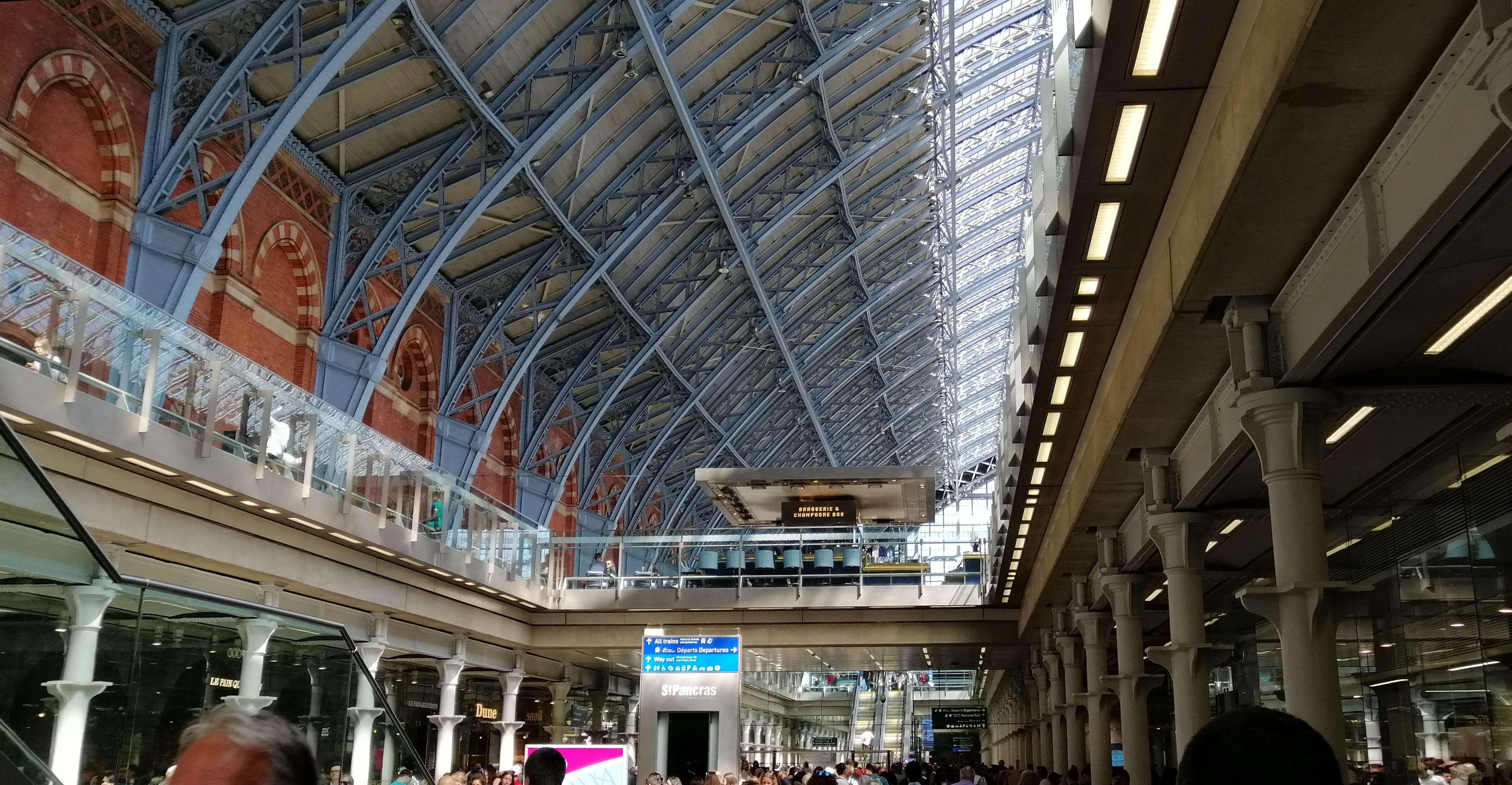
We arrived from Paris aboard the Eurostar—a fast and extremely comfortable journey that dropped us off at St. Pancras International station. As soon as we stepped off the train, we were struck by the constant bustle of travelers and the magnificent Victorian architecture of the station, easily one of the most beautiful in Europe.
Since King's Cross is right next door, we walked over for a few minutes. Yes, the famous Harry Potter station! But Platform 9¾ would have to wait. First, we had to solve something far more practical: getting around London over the next few days.
In this article you'll find:
- Day 1: From Paris to the Icons of the City
- What is the best way to get around London today?
- A different accommodation: A university residence
- Our first time on a double-decker bus
- The Monument to the Great Fire of London
- The City viewpoint: Sky Garden
- Tower of London: A journey through nearly 1,000 years of history
- A sweet final surprise with the iconic Black Cabs
- Day 2: Museums, History, and Art in London
- Day 3: Monarchy, Abbeys, and River Cruises
- Day 4: Glass Floors on Tower Bridge and Science Museums
- Day 5: A Ritual Before Departure
Viajoxmicuenta Tip What is the best way to get around London today?
Before our trip, we analyzed every option carefully because London isn't cheap, and we wanted to stretch every Pound as far as possible.
During our visit, we used a National Rail Travelcard, which at the time granted access to 2-for-1 discount offers at several top attractions. It was a great choice for that particular trip and saved us a lot of money.
However, the system has evolved. If you travel today, the easiest approach is simply paying with a contactless bank card (or mobile payment via Google Pay or Apple Pay). The transport system automatically applies daily fare caps, so you'll never pay more than the limit regardless of how many trips you make.
If your itinerary includes several paid attractions, it's still worth checking current National Rail or Days Out Guide promotions to see if purchasing a qualifying train ticket pays off.
Two essential smartphone apps:
- Citymapper: Our absolute lifesaver on the Tube. It displays the exact direction for each line (Westbound, Eastbound, Northbound, or Southbound), suggests which carriage puts you closest to the exit stairs, and tells you which station exit to take.
- Google Maps: Fantastic for combining walking routes with public transit, often finding paths that minimized walking distances.
Our advice is simple: install both! They complement each other perfectly.
With transportation sorted out, we headed straight to our accommodation.
After comparing dozens of options, we found a very unique alternative to traditional hotels: a university student residence that rents out its rooms to travelers during holiday breaks.
You can check out this residence on Booking.com via this link.
It was located right opposite the Tate Modern—an ideal location for exploring much of central London on foot—and the rate was substantially lower than nearby hotels.
Oh, before we forget! If you need internet access while traveling abroad, we recommend using an eSIM with proven coverage and great regional plans. We share more details on this page.
We dropped off our bags and immediately went out. We were dying to start exploring London!
Our very first ride on a double-decker bus was unforgettable.
Like true tourists, we rushed straight to the upper deck and grabbed the very front row seats. The view from up there was spectacular—we felt like Garfield gazing out at the world through a giant windshield!
As soon as the bus crossed the Thames, we instantly realized why so many travelers fall in love with this city. London's architecture unfolded before us, blending historic landmarks, ancient churches, and futuristic skyscrapers in surprising harmony.
We barely made any fast progress because every few meters a new striking building urged us to snap another photo!
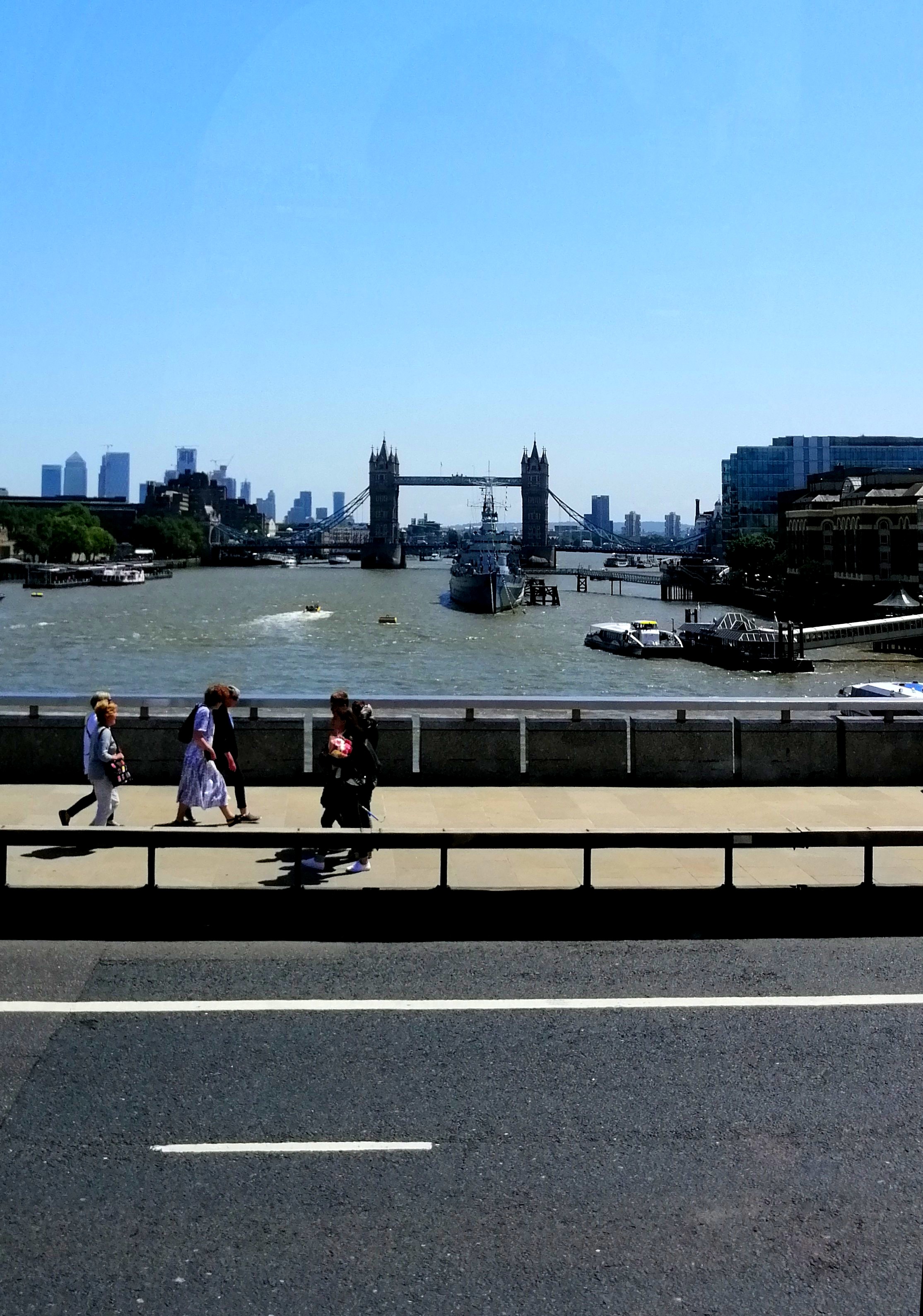
As we moved along, we spotted a huge stone column towering above the surrounding buildings. It was the Monument to the Great Fire of London, built to commemorate the 1666 disaster that destroyed most of the medieval city. It's fascinating to think how a tragedy of that scale reshaped London forever, leading to safer brick construction standards and the rebirth of a far more organized city.
The column stands 311 steps tall—the exact distance separating it from the bakery on Pudding Lane where the fire originally broke out.
The City Viewpoint: Sky Garden
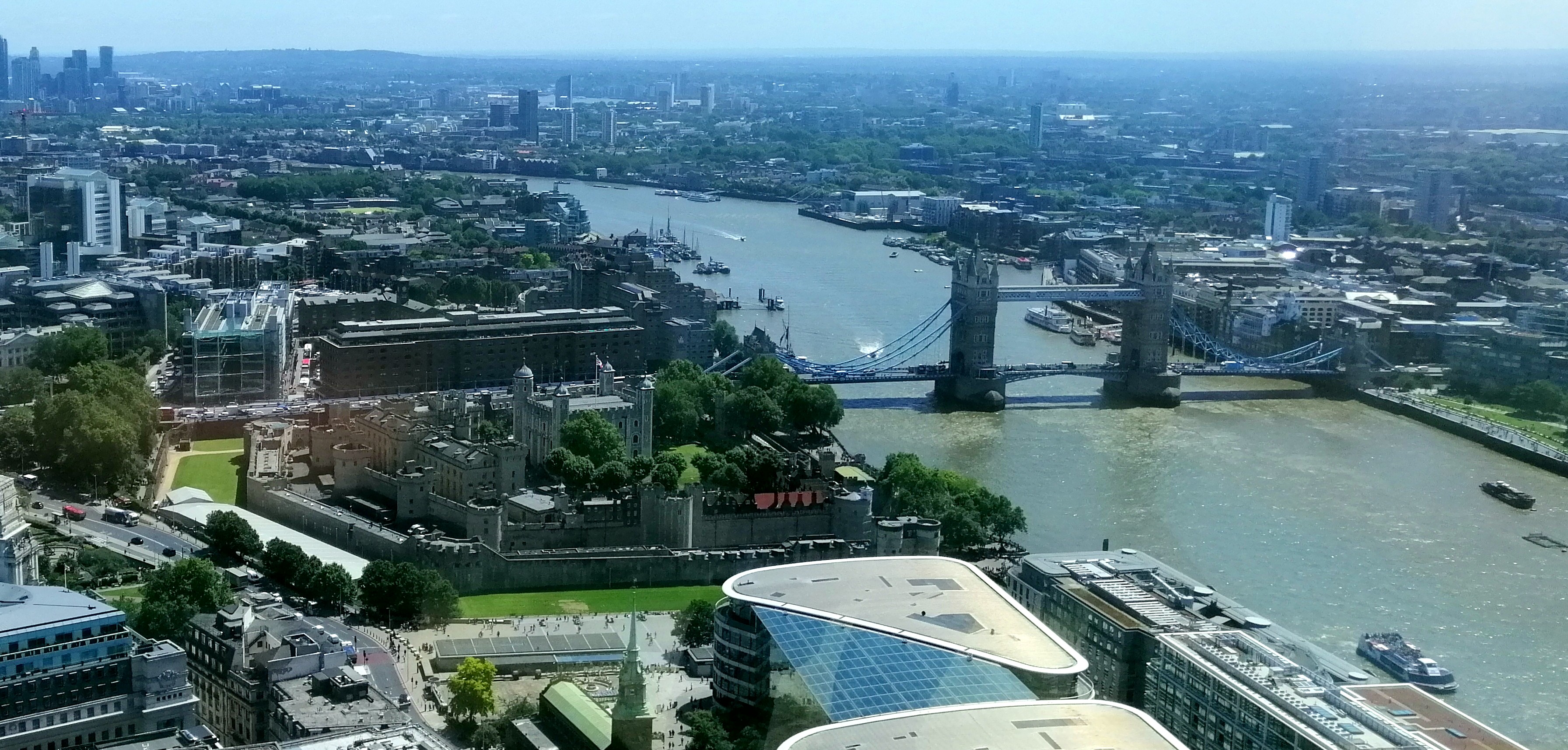
Our first major objective for the day was the Sky Garden. We had read that it was one of the few free observation decks in the city, so we booked our time slot well before flying out. What we didn't expect was that this would be the absolute best way to start discovering London.
From up there, you take in the true scale of the metropolis. The River Thames snakes between heritage sites and glass towers, with Tower Bridge, St. Paul's Cathedral, and dozens of skyscrapers creating a panorama you can't tear your eyes away from. We stayed up there way longer than planned. Watching London from above is genuinely mesmerizing.
We grabbed lunch right there at the top—having a meal with a view like that isn't something you do every day! And then came a moment we still recall with a smile. Nacho looked up at us and said: «Mom, you really surprised me this time!». That single line summarized how all three of us felt far better than any photo could.
🎟️ Admission & Advance Booking Info
Cost: Free.
Advance booking required?: YES (Essential).
How to book: Free tickets are released every Monday on the official Sky Garden website approximately 3 to 4 weeks in advance. They sell out in minutes!
Tower of London: A Journey Through Nearly 1,000 Years of History
After enjoying the views at Sky Garden, we walked over to one of the places we were most eager to visit: the Tower of London.
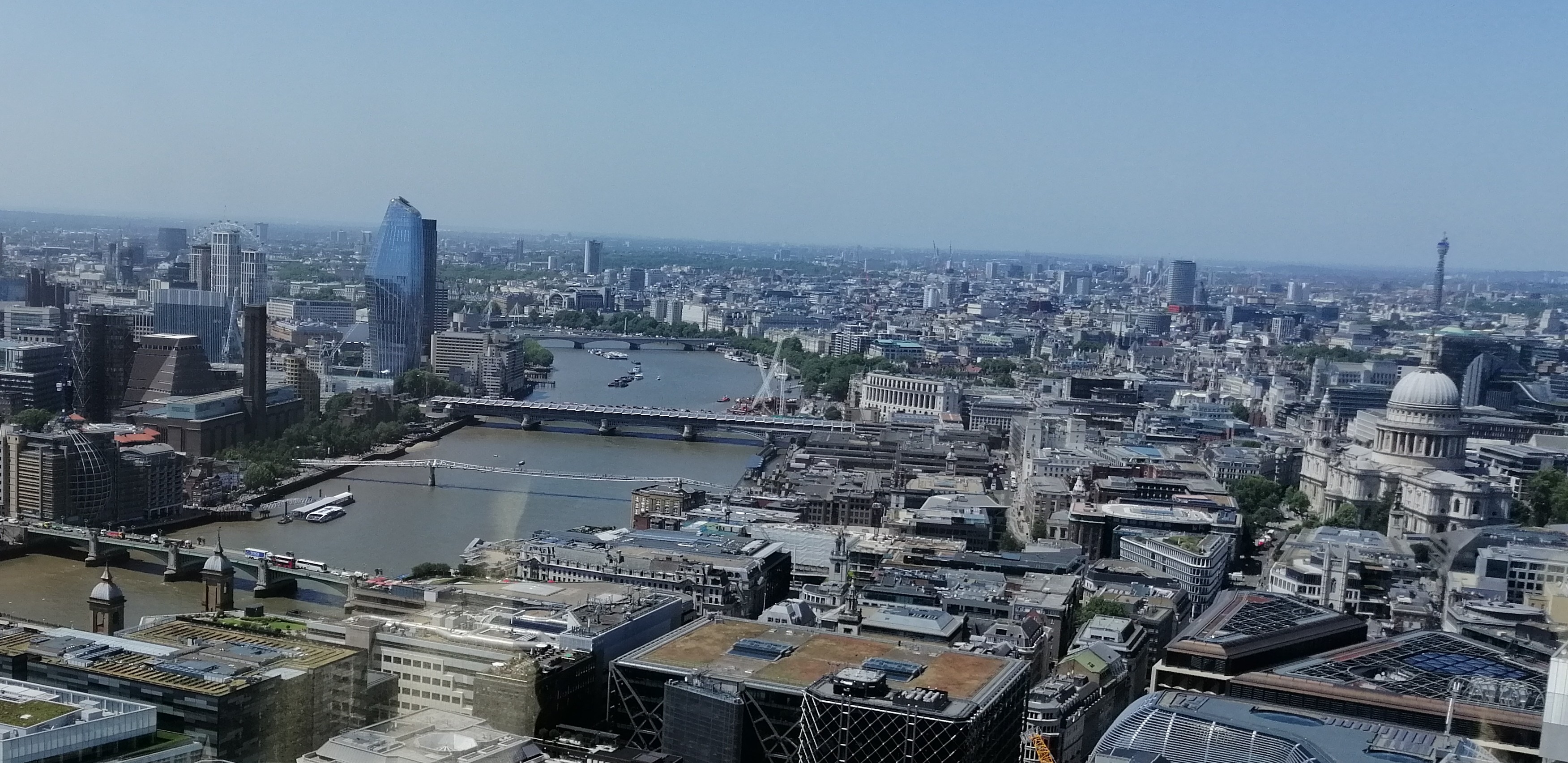
Even from a distance, it looks imposing. Its thick stone walls, encircled by an ancient moat, remind you that for centuries this was no ordinary castle, but a formidable fortress built to protect the heart of the realm.
A UNESCO World Heritage site, the Tower was founded by William the Conqueror shortly after the Norman Conquest of 1066. Over nearly a millennium, it served dramatically different roles: royal palace, fortress, prison, royal mint, armory, and even a menagerie housing exotic animals gifted to English monarchs.
Walking through its grounds is literally stepping back through British history.
The moment you cross the gates, you realize this isn't just another old castle. Every courtyard and tower carries a story. Famous historic figures were imprisoned here, including Anne Boleyn (second wife of Henry VIII) and young Lady Jane Grey, the queen who occupied the throne for just nine days before her execution.
One detail we found fascinating is that the Tower remains a living community. The famous Yeoman Warders (popularly known as Beefeaters) still live within the complex with their families and guard this historic fortress. Their guided tours, packed with anecdotes and sharp British humor, are one of the absolute best ways to experience the site.
And then there are the famous ravens! Legend has it that if the ravens ever leave the Tower, the Crown and the Kingdom will fall. True or not, the myth adds to the fortress's charm, and visitors observe these large birds with a mix of curiosity and awe.
A highlight for us was entering the Jewel House, home to the British Crown Jewels. On display are stunning crowns, scepters, orbs, and ceremonial regalia still used in royal coronations today. Photography is strictly prohibited inside—a rule that might surprise you at first, but ultimately allows you to immerse yourself in the moment without screens in the way. Seeing those symbolic treasures up close is unforgettable.
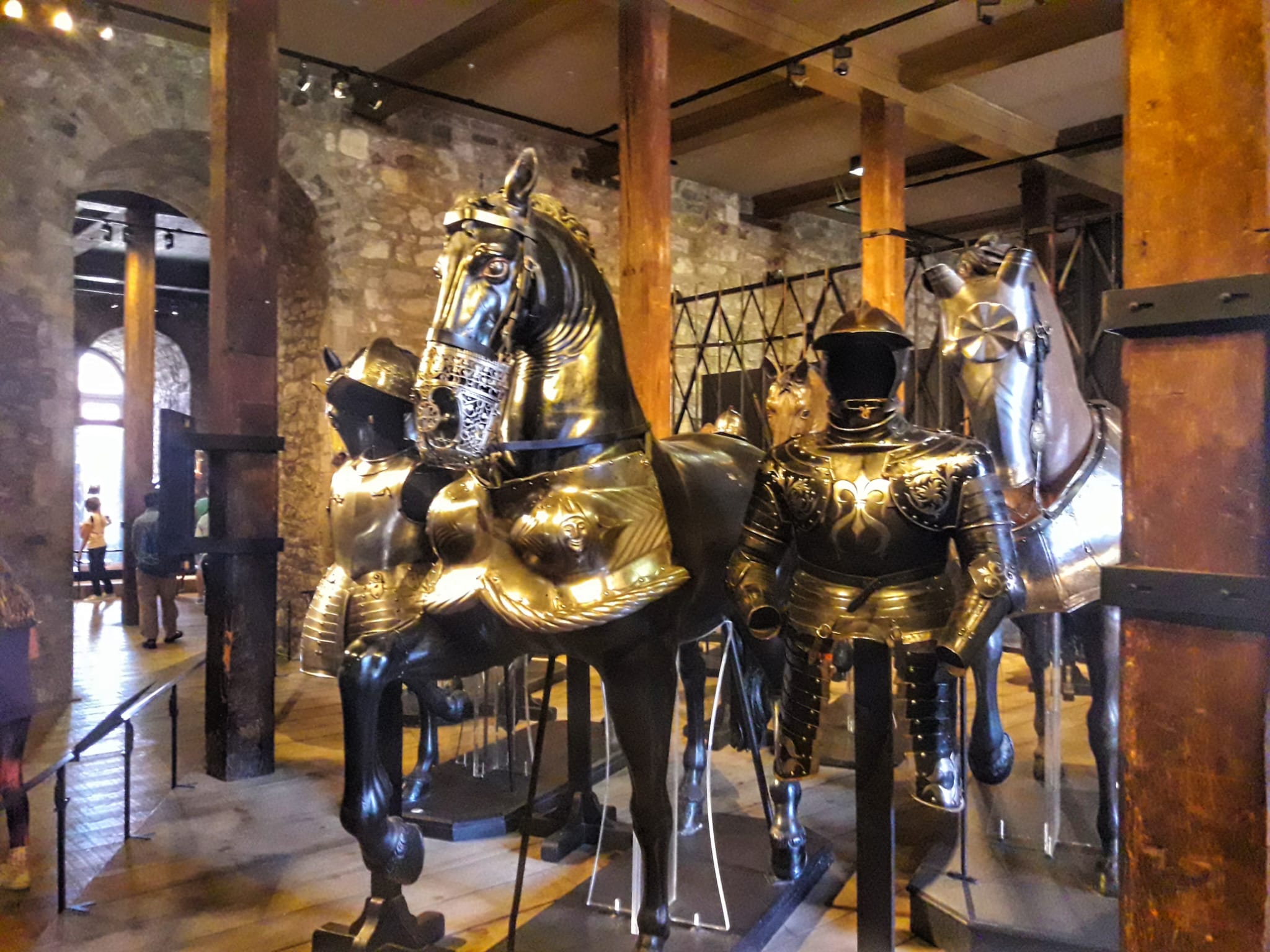
We also explored the White Tower, the oldest structure in the complex. Inside, you'll find impressive displays of medieval armor, weaponry, and royal tournament gear. Nacho was captivated by this section—the knightly armors and horse gear really sparked his imagination!
Another poignant detail was reading the graffiti carved into the stone walls by former prisoners centuries ago. Pausing in front of those inscriptions brings home the reality that real people spent their final days here, leaving behind small marks hoping not to be forgotten.
Our visit lasted several hours, yet we felt we had only uncovered a fraction of what this ancient complex holds.
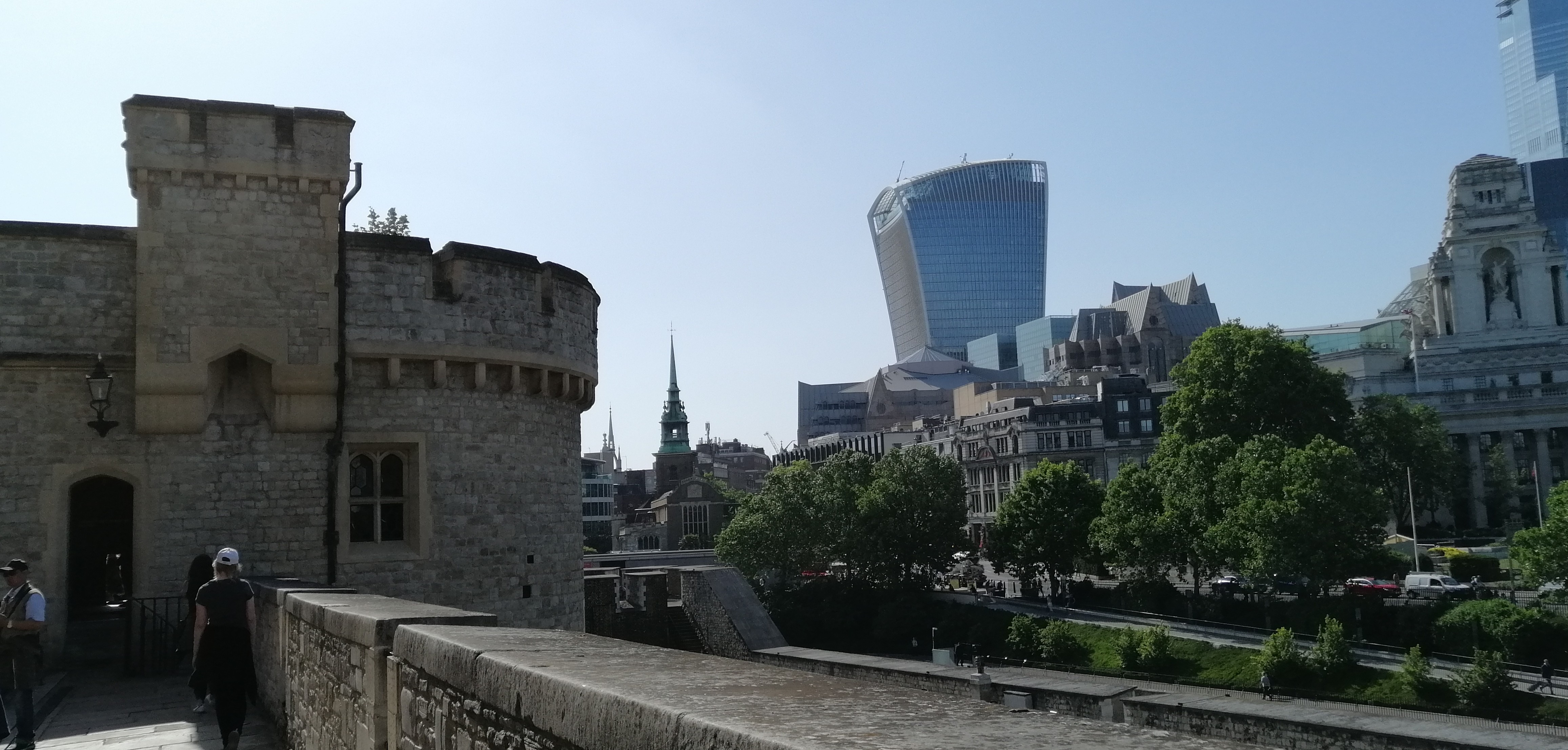
As we left, Tower Bridge stood right in front of us as if bidding us farewell. We paused along the Thames bank for a few minutes to take in the view. It's impossible not to stop and photograph one of the world's most iconic bridges!
That's when we decided to take a break for our traditional afternoon cappuccino. And quite unexpectedly, the day had one last surprise in store for us...
While resting and reviewing everything we had seen, we noticed a row of classic black London cabs parked nearby.
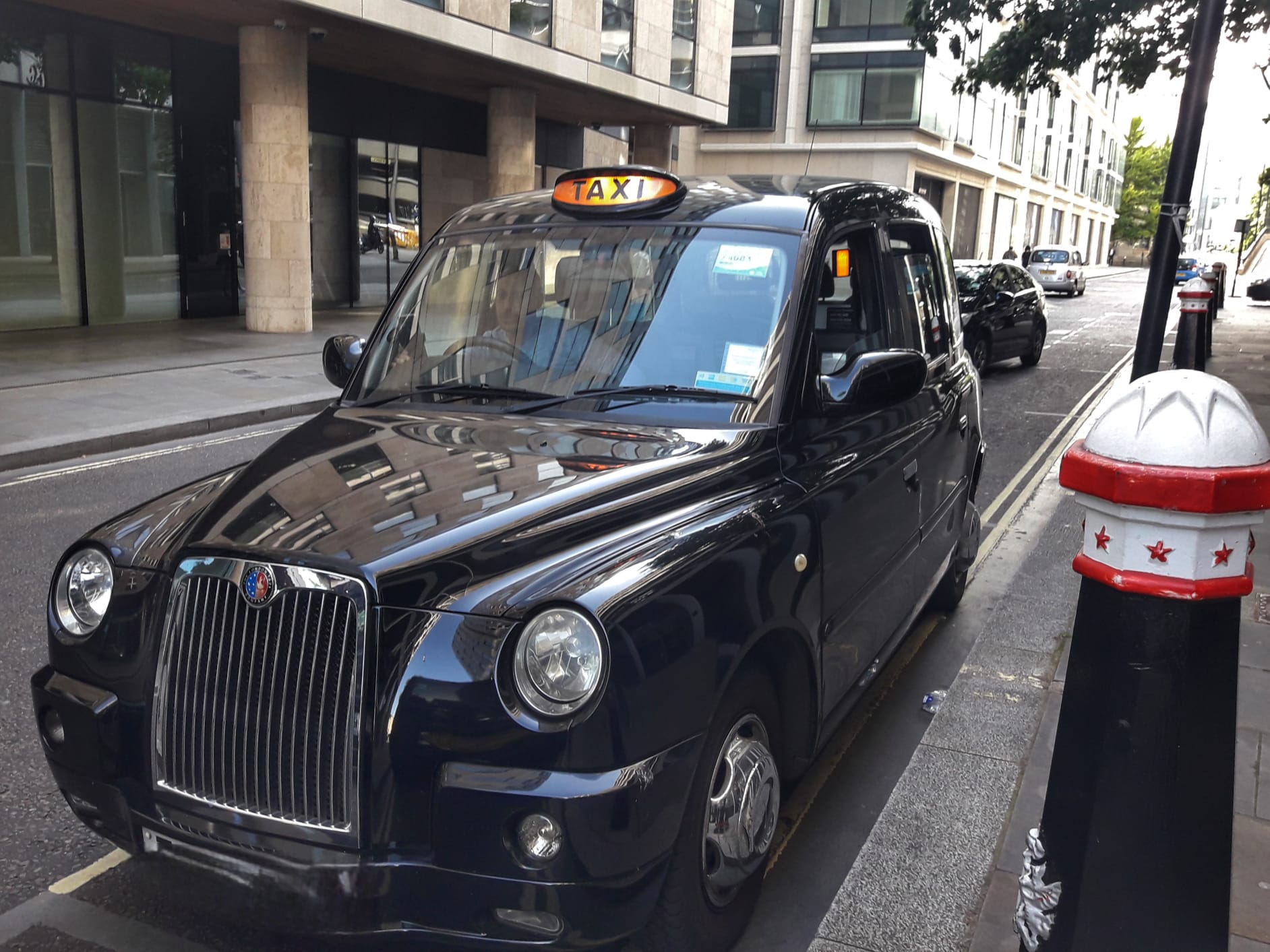
They had always caught our eye in movies, English textbooks, and travel photos. Their unique, elegant, timeless design makes them true symbols of London.
🚕 Behind the Icons: Up Close with a "Black Cab"
Driven by curiosity, we approached one of the drivers and timidly asked if we could take a quick peek inside the vehicle. Even though we clarified we weren't taking a ride, he smiled warmly, popped open the door, and invited us inside!
We were able to look around the interior, snap a few photos, and chat with him for a bit. We were amazed at how spacious the passenger cabin was—designed specifically for comfort and luggage space.
It might seem like a small detail, but for us, it was one of those genuine human encounters that make travel truly special.
We had arrived from Paris that morning, and without realizing it, had already walked through centuries of history, marveled at a world-class skyline, and explored a medieval fortress. If day one was this packed, we couldn't wait to see what else London had in store!
Reenergized and happy, we walked back along the Thames promenade, crossed Tower Bridge, and boarded our beloved double-decker bus to enjoy the city views back to our hotel.
Below is a widget featuring discount offers from Tiqets.com. We've used them on several trips and saved a good deal. Take a look!
If you decide to book via Tiqets.com, using our links costs you nothing extra (or even less!) while supporting our independent travel guides. Thank you!
Our second day started with a breakfast that surprisingly became a fun memory of its own.
Since we were staying at a student residence, the cafeteria felt like a scene straight out of an American movie. You lined up with your tray while kitchen staff served fried eggs, omelets, sausages, baked beans, hash browns, toast, and all the staples of a full English breakfast.
p>The best part wasn't just the food, but sharing the dining hall with students from all over the world. Watching trays go by showed you how breakfast habits differ globally—a simple yet fascinating cultural experience.
The British Museum
Our first stop of the day was the British Museum—one of the world's premier cultural institutions. Entry is free, though voluntary donations are welcome.
The moment you step through the main entrance and look up, you're blown away by the massive glass roof over the inner courtyard. Known as the Queen Elizabeth II Great Court and designed by architect Norman Foster, this glass canopy makes the central hall one of London's most breathtaking architectural spaces.
And that was only the beginning.
Room after room, we encountered artifacts we had previously only seen in textbooks or documentaries. The museum houses thousands of years of human history spanning ancient Egyptian, Greek, Roman, Mesopotamian, and Pacific civilizations. At times, you forget you're in London and feel like you're walking through the ancient world.
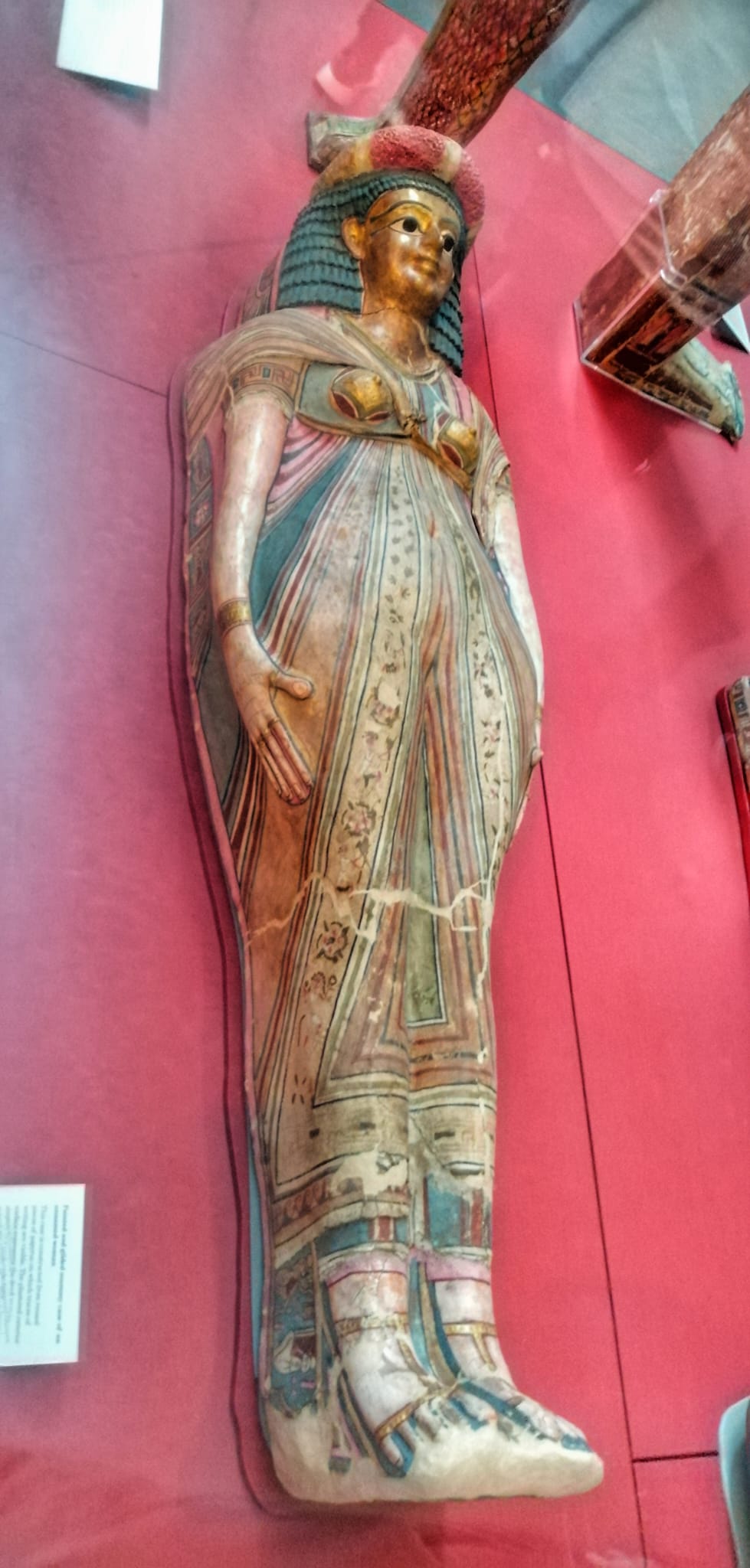
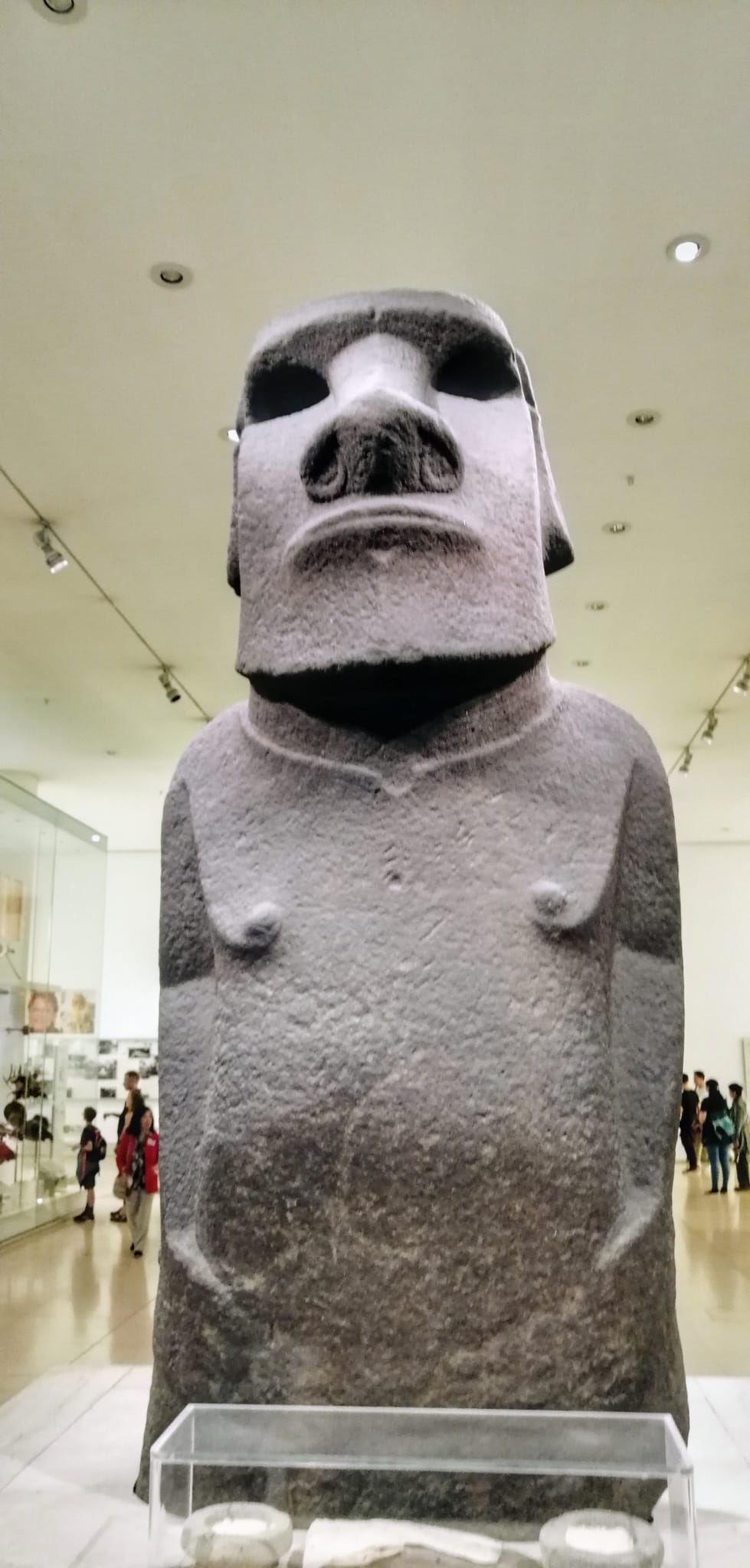
One of the museum's undisputed stars is the Rosetta Stone. Interestingly, we initially walked right past its gallery without realizing it, only discovering on our way back that it had been there all along!
Carved in 196 BC, this slab features a decree issued by King Ptolemy V in three scripts: Ancient Egyptian hieroglyphs, Demotic script, and Ancient Greek. It provided the key to unlocking Egyptian hieroglyphs and deciphering an entire ancient civilization.
Standing in front of it is humbling—time seems to stand still when looking at an object of such impact.
The museum is truly immense. Beyond its remarkable artifacts, it also invites reflection regarding the provenance of many exhibits. While awe-inspiring, it naturally prompts debates over whether certain treasures belong in their country of origin—an ongoing global discussion that accompanies your visit.
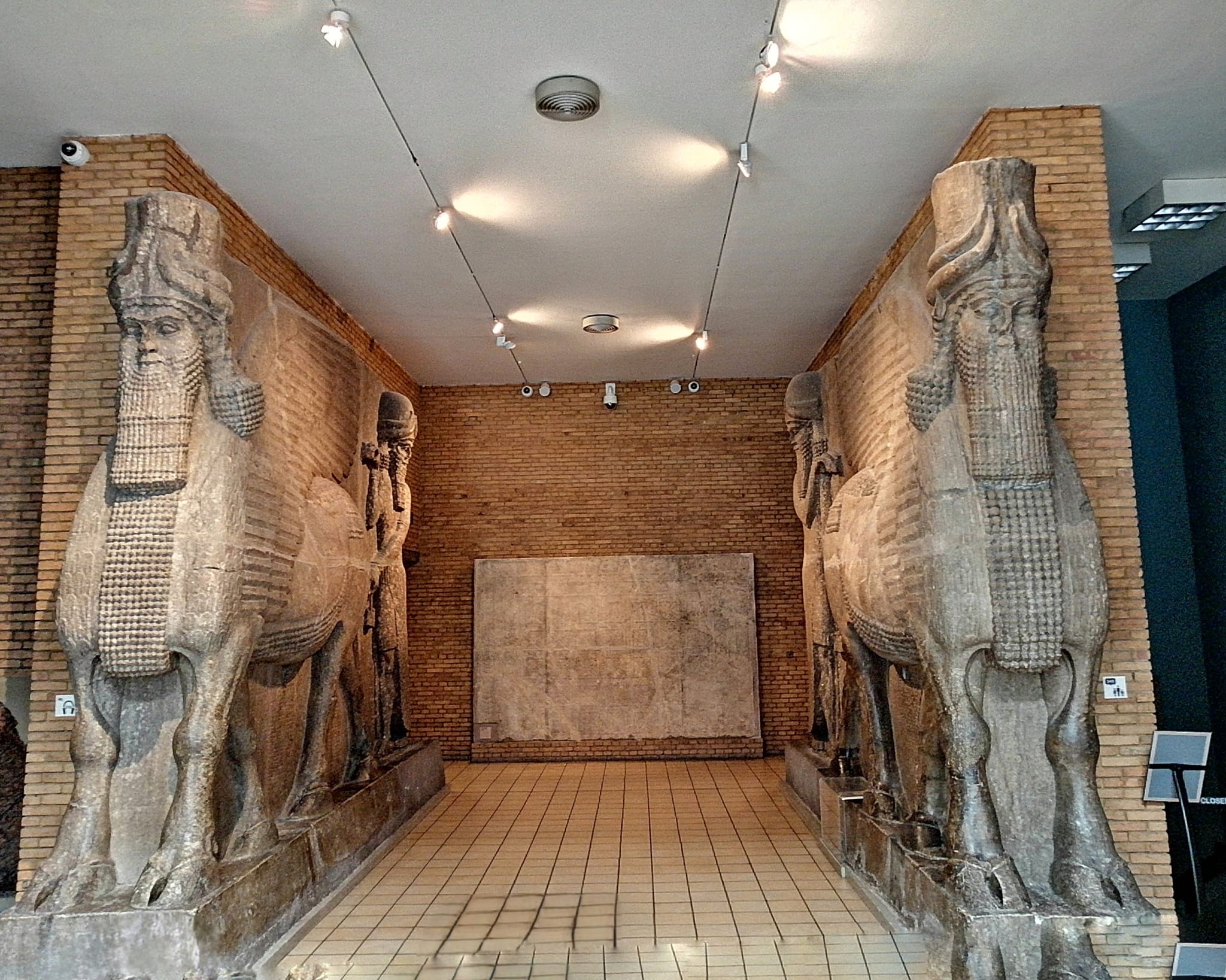
After exploring for several hours, we took a break at the museum cafe before continuing our day.
🏛️ Admission & Booking Info
Cost: Free (voluntary donations accepted).
Advance booking required?: Highly Recommended.
How to book: Reserve your free timed entry ticket directly on the official British Museum website to bypass long security lines.
📌 Recommended Tours at the British Museum
The British Museum is enormous. Joining a guided tour is a fantastic way to make sure you don't miss key highlights!
👉 Need a discount? Email us at viajoxmicuenta@gmail.com and we'll share a GetYourGuide promo code!
Covent Garden and Chinatown
Our next intended target was Covent Garden, though our stroll included several enjoyable detours along the way.
En route, we spotted iconic red telephone boxes. Even though we had taken photos with one the day before, it was impossible to resist stopping for a few more shots!
Riding the bus through West End's theater district, we saw giant marquees for shows like Harry Potter and the Cursed Child and The Lion King, making it clear why London is considered a global capital for theater.
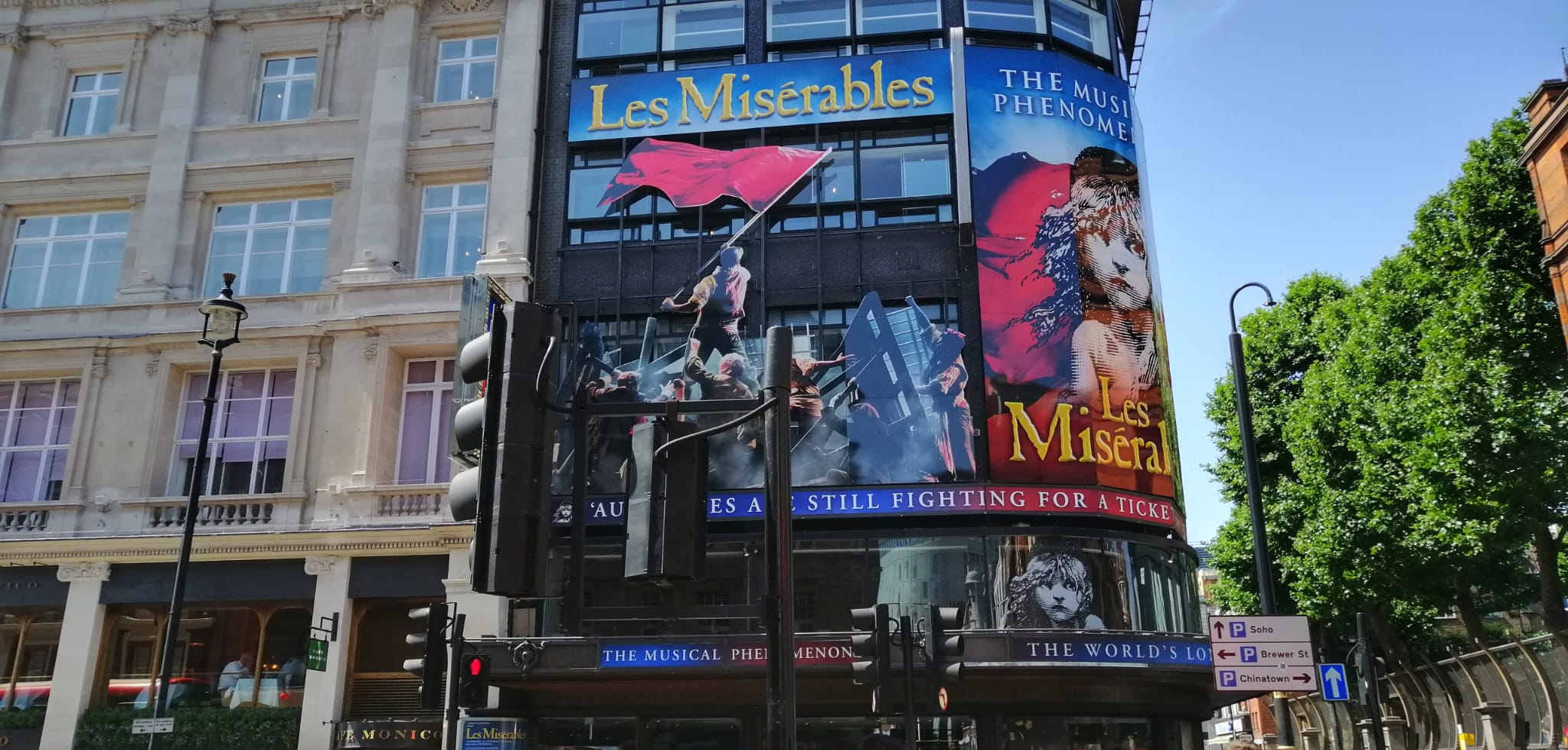
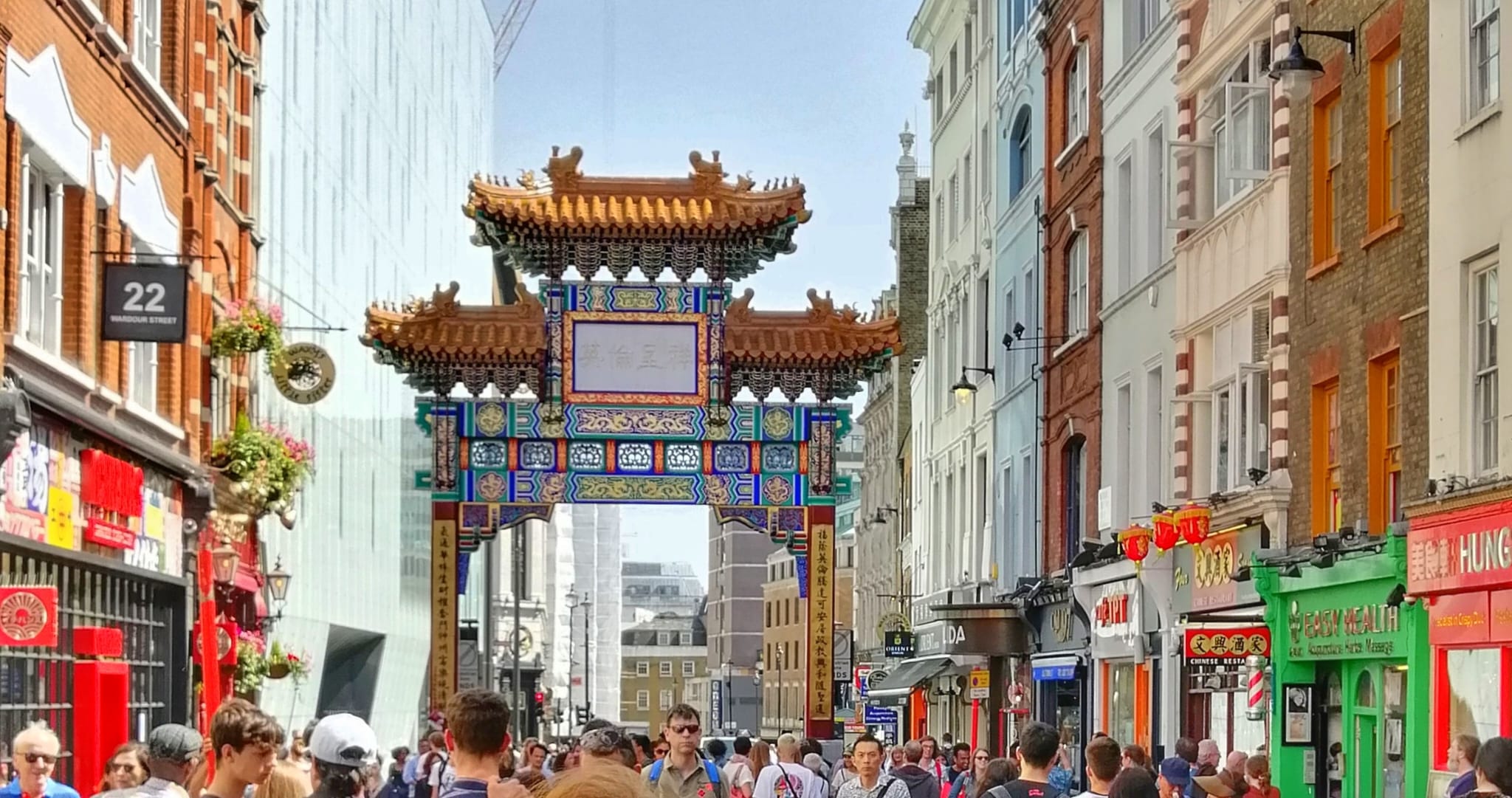
Since Chinatown was just steps away, we hopped off to wander beneath red lanterns, explore Asian grocers, and soak up the lively neighborhood atmosphere.
Following our hearty breakfast, we looked for a light lunch and settled on a LEON restaurant—enjoying freshly served rice boxes with grilled meats, veggies, and mint-infused water. A fresh, wallet-friendly option!
Imperial War Museum
After lunch (around 4:00 PM), we crossed back over the Thames toward the Imperial War Museum.
From the vast central atrium—where military aircraft, rockets, and armored vehicles hang suspended in mid-air—the museum captivates you instantly with its design.
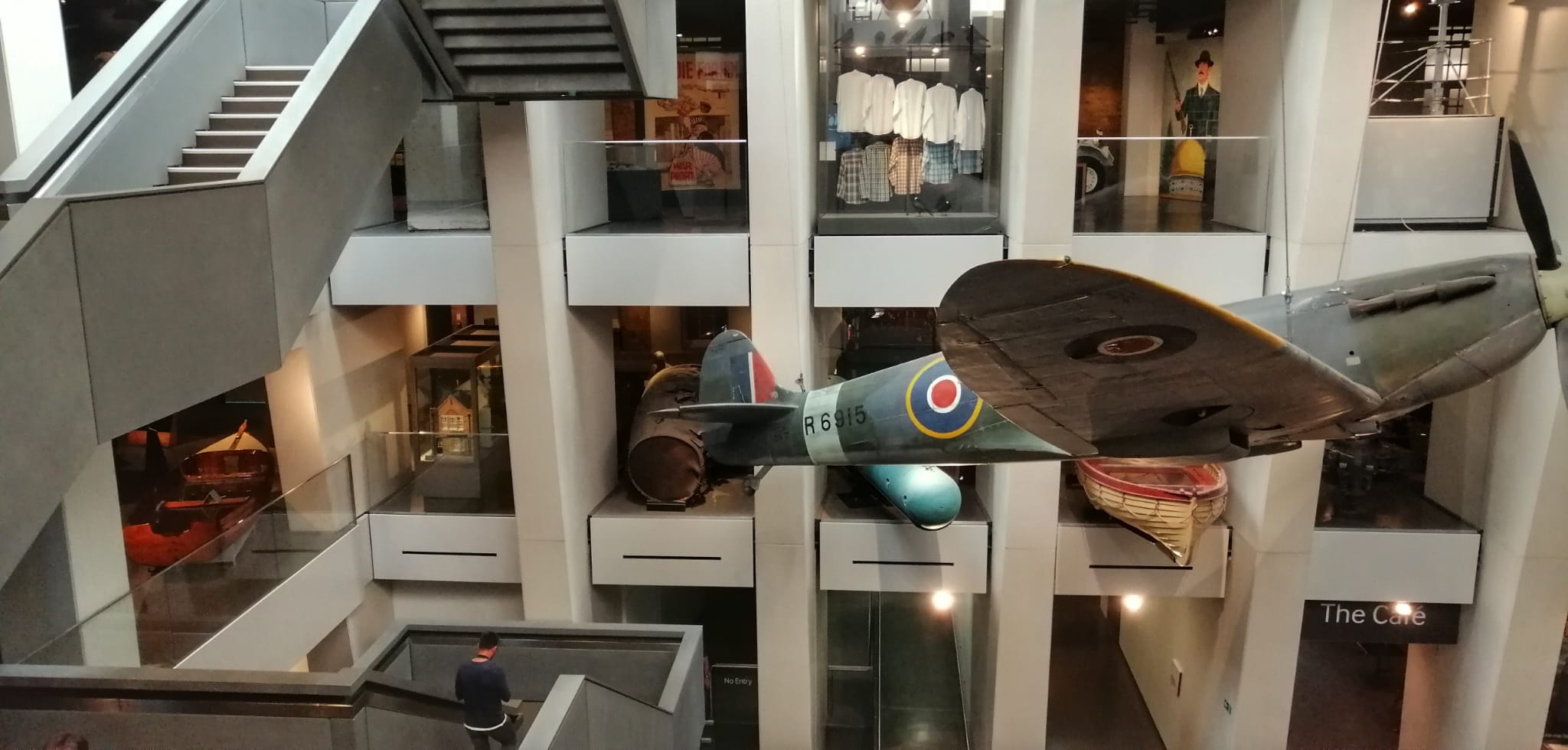
Exhibits cover WWI, WWII, the Cold War, and modern conflicts. Nothing quite prepares you for the upper galleries dedicated to the Holocaust. Moving personal artifacts, photographs, and testimonies record one of humanity's darkest chapters with immense dignity (photography is prohibited in these galleries).
Admission to the Imperial War Museum is also free, and it closes at 6:00 PM, allowing you to maximize your afternoon.
🎖️ Admission & Booking Info
Cost: Free.
Advance booking required?: Optional (Recommended).
How to book: Book free timed tickets on the official Imperial War Museum London website to speed up entry.
📌 Top Recommended London Tours
The National Gallery
Our final stop of the day was The National Gallery on iconic Trafalgar Square. Since it was Friday, opening hours were extended until 9:00 PM.
Admission is free, letting us admire masterpieces by Raphael, Velázquez, Rembrandt, Van Gogh, Monet, and Michelangelo.
🎨 Admission & Booking Info
Cost: Free.
Advance booking required?: Optional (Recommended during peak season).
How to book: Reserve free entry slots on the official National Gallery website.
Outside, Trafalgar Square was buzzing with energy. A street performer put on a Michael Jackson tribute surrounded by a cheering crowd, while chalk artists created pavement art nearby, building a vibrant night atmosphere.
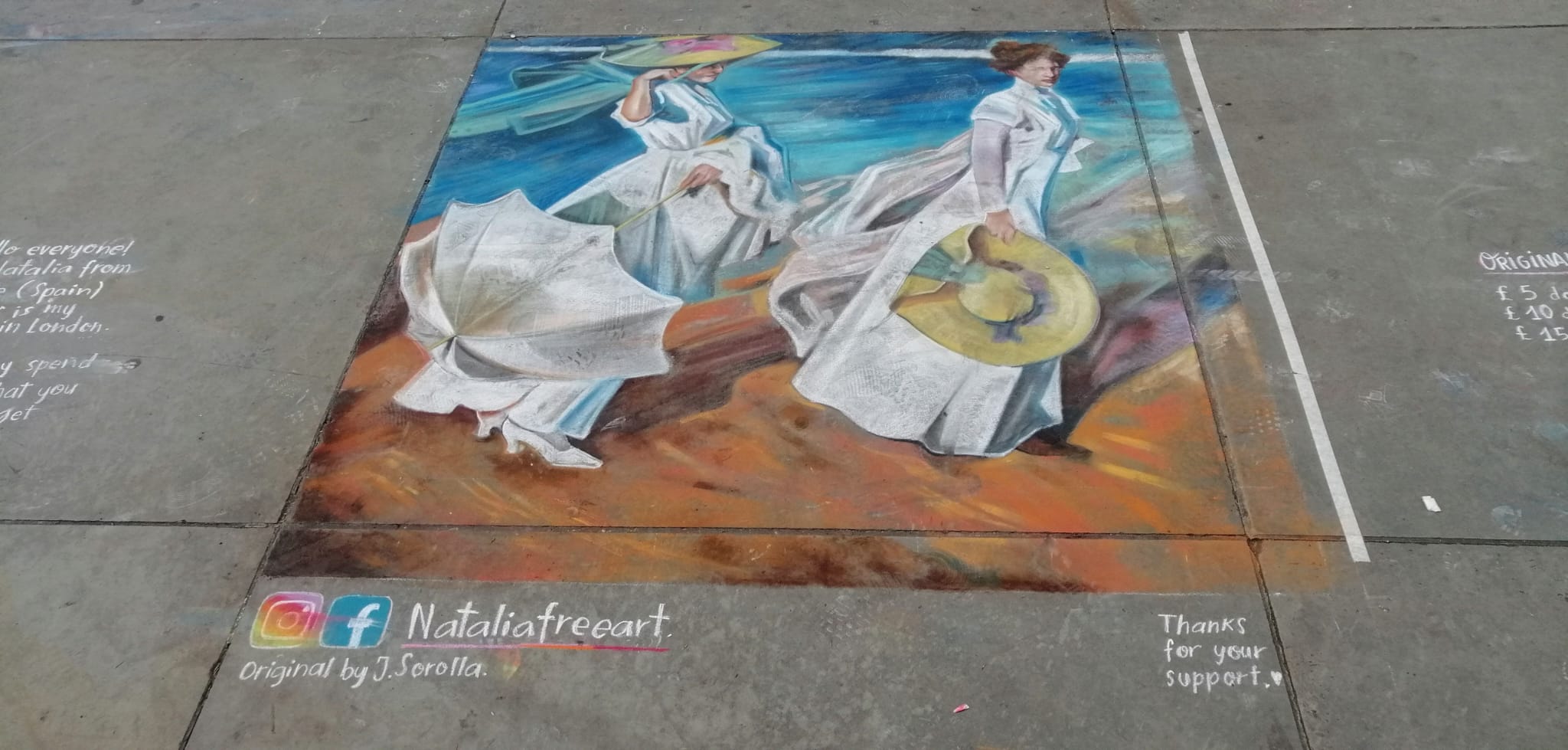
Exhausted, we walked to Piccadilly Circus where giant neon billboards lit up the night. We popped into the massive M&M's store, grabbed a quick bite, and sat down to soak in the energy of the city.
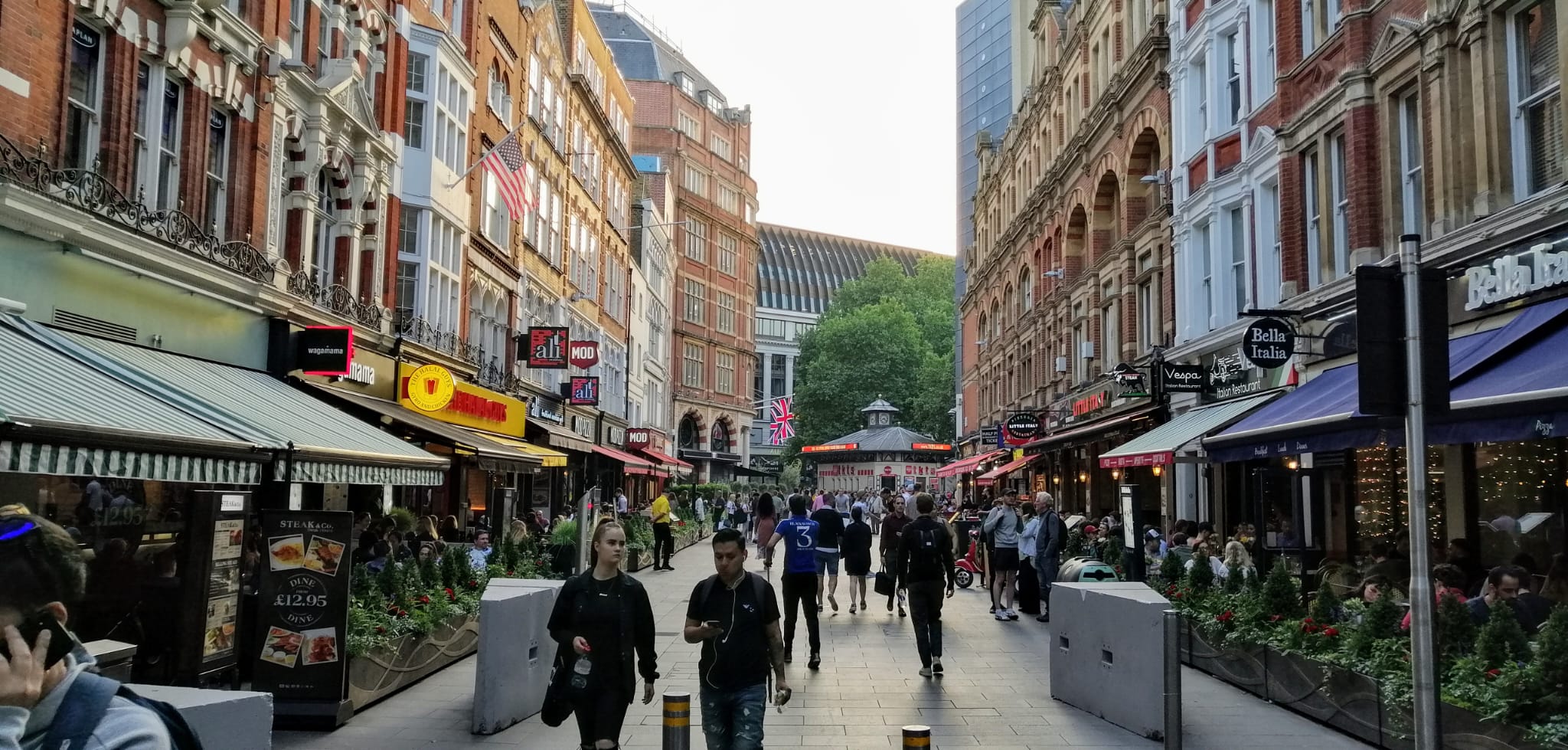
What a day! Three world-class museums, centuries of history, iconic art, and unforgettable corners that showed us why London constantly amazes.
While Day 1 focused on London icons and Day 2 on its world-renowned museums, Day 3 brought us face-to-face with royal traditions and showed us why the River Thames remains the soul of the city. Between centuries-old ceremonies, royal carriages, a choir echoing under Westminster Abbey's stone vaults, and a scenic river cruise, this day alone made our entire trip worthwhile.
Buckingham Palace & The Changing of the Guard
Our day started early heading to Buckingham Palace, official residence of the British monarch in London. While the building itself is grand, the main event is the Changing of the Guard ceremony.
We caught the Sunday parade, drawing crowds along the avenues. Watching guards march past in iconic red tunics and bearskin hats accompanied by a full military band was like seeing a movie scene come to life!
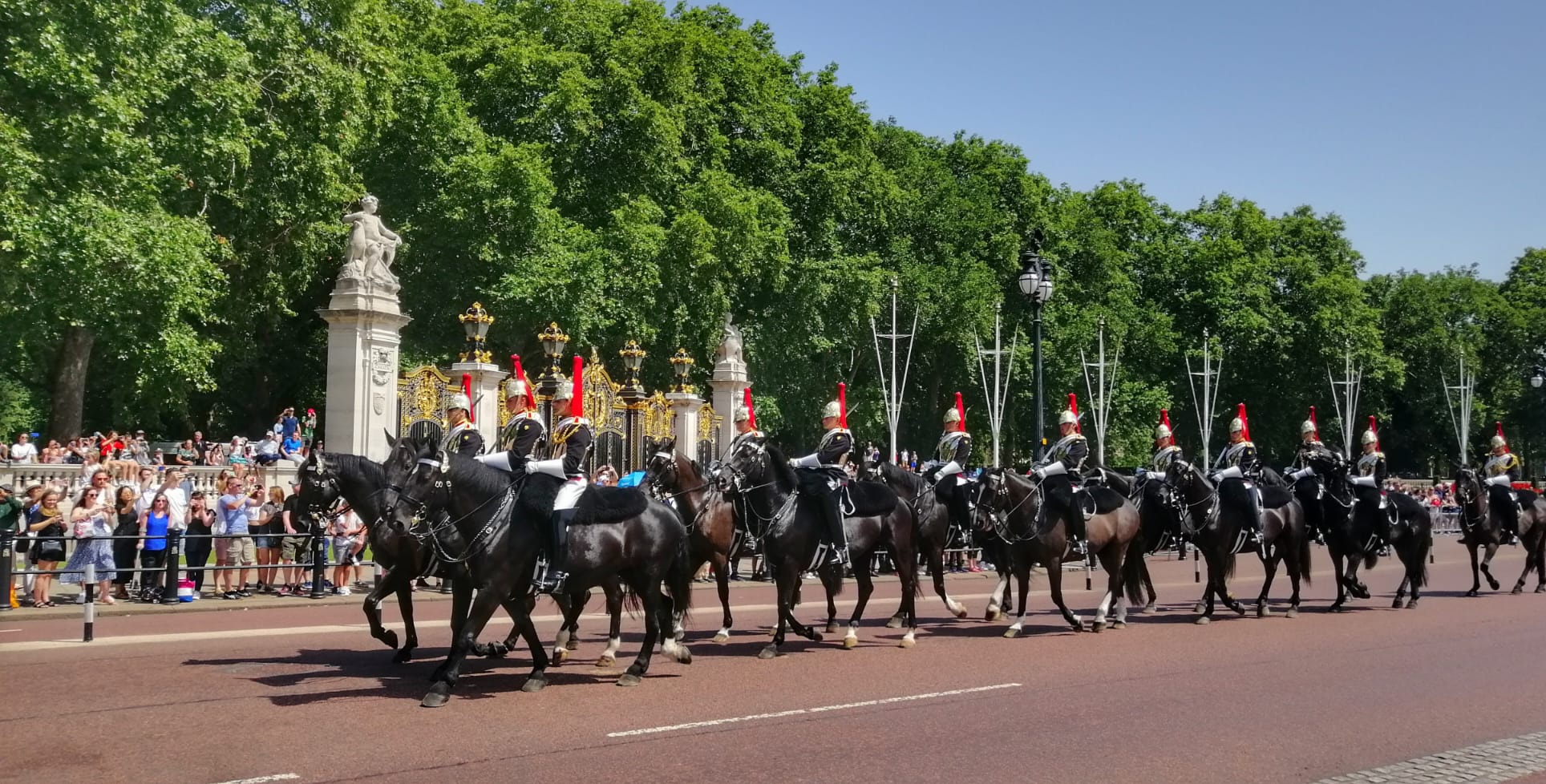
What surprised us most was the military band's musical choices! Instead of strictly traditional marches, they played surprisingly modern pop tunes, showing how centuries-old traditions can evolve while staying true to their roots.
Because it's enormously popular, make sure to arrive early for a good viewing spot. Always double-check schedules online beforehand as times vary by season and weather.
Royal Mews: The Royal Carriages
Just a short walk from Buckingham Palace lies a hidden gem often overlooked by tourists: the Royal Mews, the working royal stables.
We had no idea how impressive the state carriage collection would be! On display are vehicles used for coronations, royal weddings, and State Openings of Parliament, each with incredible history.
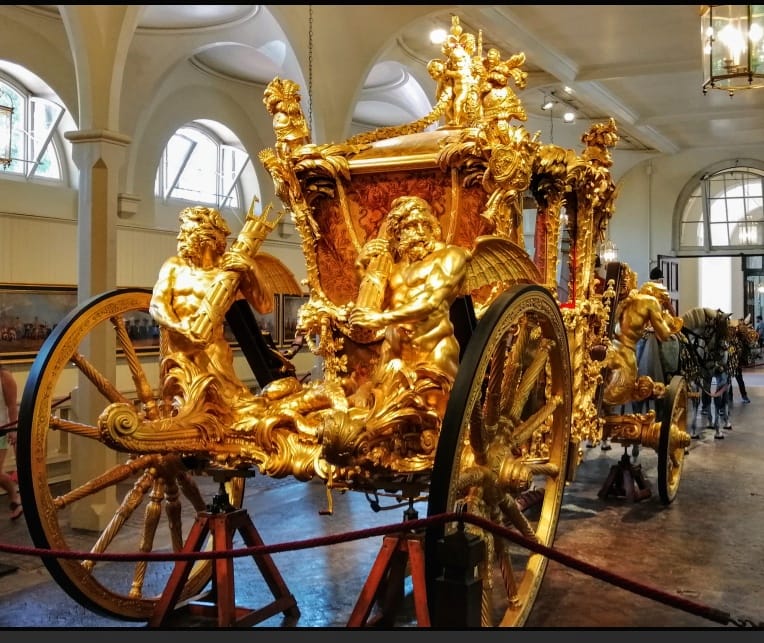
The crown jewel is the magnificent Gold State Coach, used in coronations since the 18th century. Built in 1762 and gilded in gold leaf, it's so heavy it requires eight Windsor Grey horses to pull it!
You can also tour the active stables where royal horses are trained for state ceremonies. The included audio guide does a wonderful job explaining the symbolism behind each carriage.
📌 Recommended Buckingham Palace Activities
Victoria Tower Gardens, Parliament & Big Ben
Next, we walked toward the Palace of Westminster (Houses of Parliament). While Big Ben gets all the spotlight, we discovered a peaceful retreat right beside it: Victoria Tower Gardens along the Thames.
Sitting by the river offered stellar views of Parliament's Neo-Gothic facade—a perfect spot to rest while watching boats go by. The gardens also feature fine sculptures, including a bronze casting by Auguste Rodin.
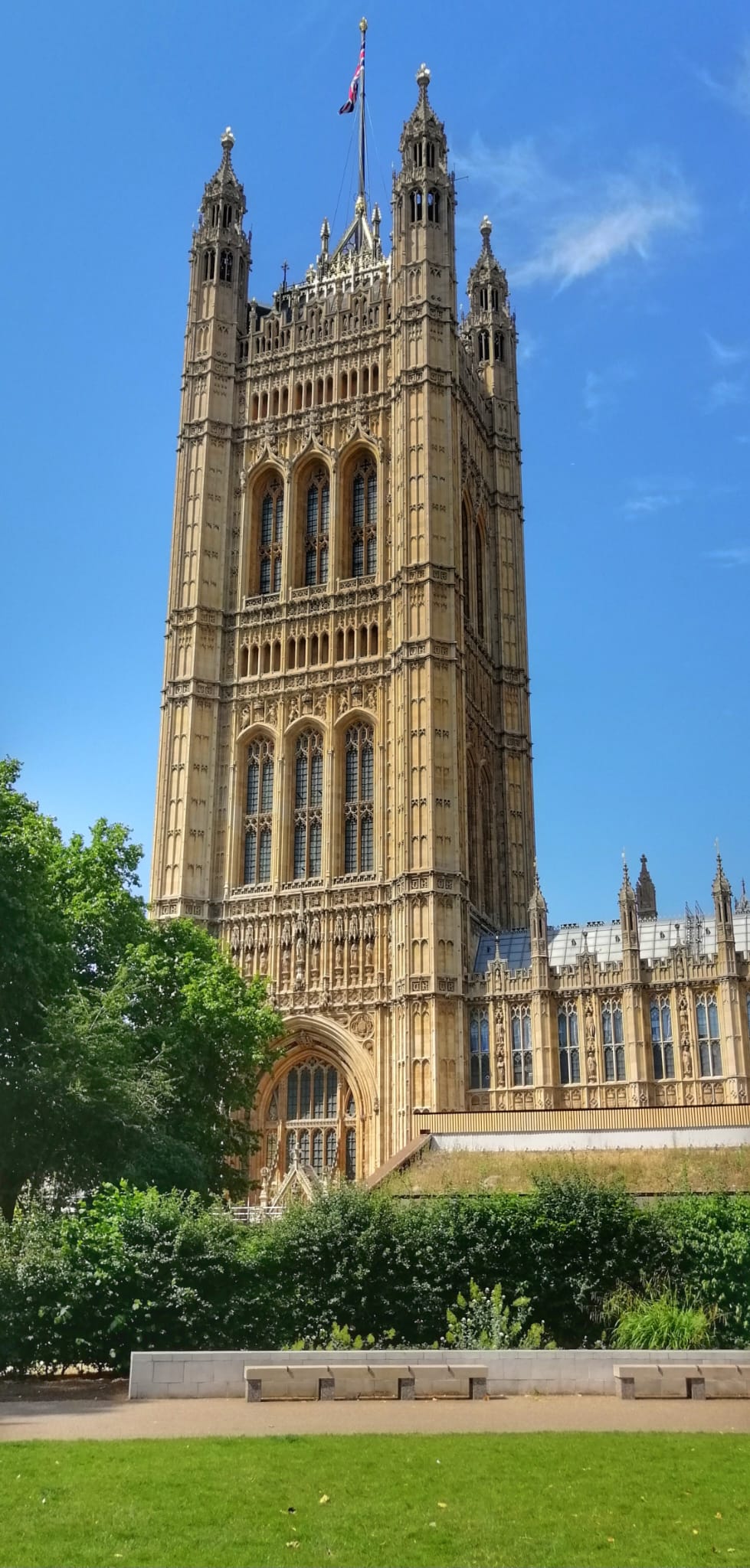
After a quick bite in the area, we took a bus to our next stop.
A Quick Visit to Westminster Cathedral
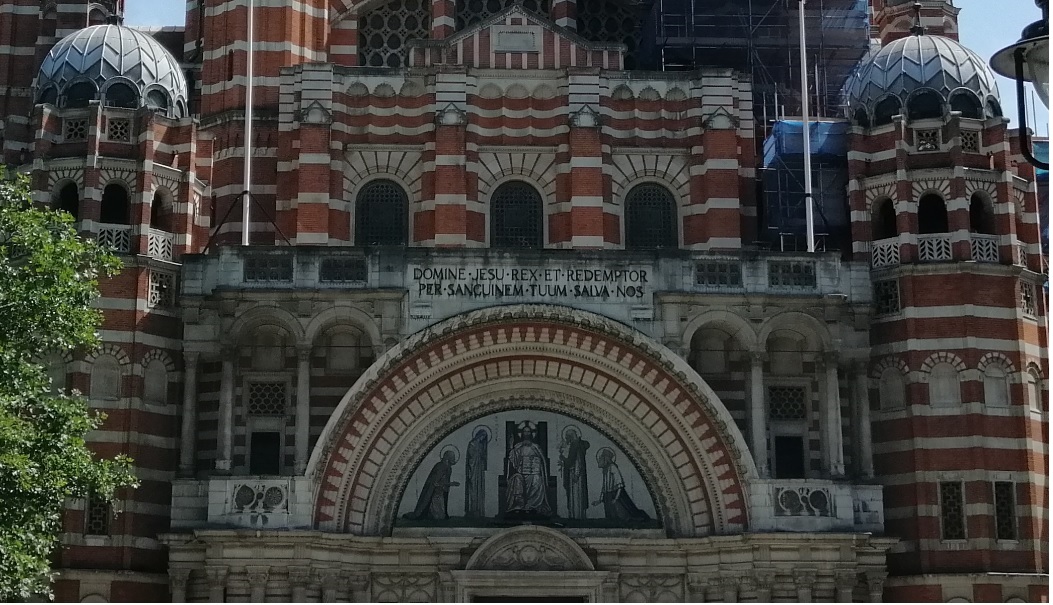
Before heading to famous Westminster Abbey, we stopped briefly at Westminster Cathedral—often confused with the abbey despite being entirely different!
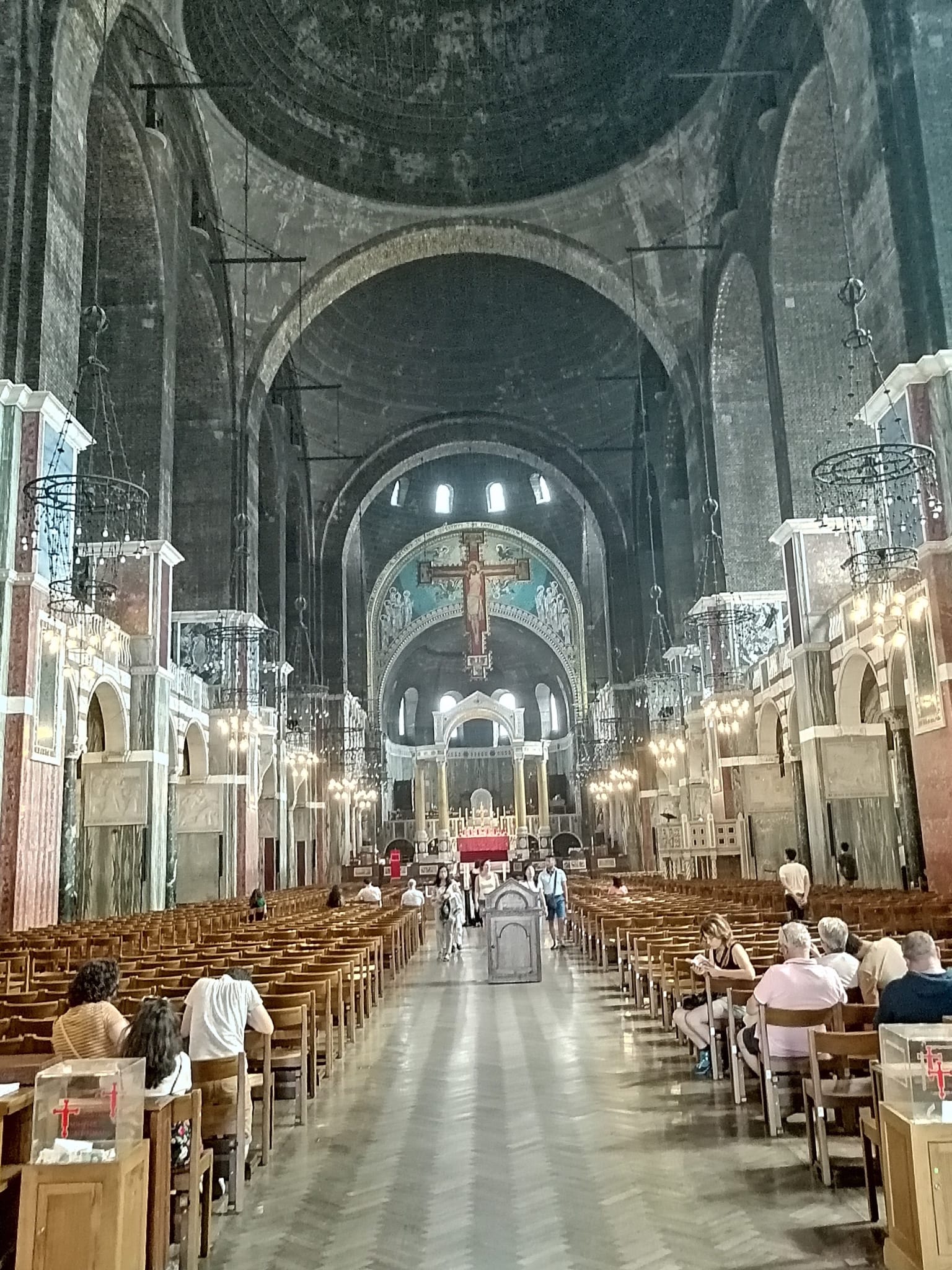
While the Abbey is the historic Anglican coronation church, Westminster Cathedral is the mother church of the Catholic Church in England and Wales. Its striking Neo-Byzantine red-brick architecture offers a remarkable contrast to Gothic style and is well worth a quick visit.
An Unforgettable Experience: Westminster Abbey
Some attractions are famous must-visits, but others end up becoming lifetime memories. Westminster Abbey delivered both.
We arrived just as the bells were ringing for a worship service. We asked if visitors could attend, and to our delight, staff welcomed us inside! That spontaneous choice gave us one of our absolute favorite memories from the trip.
Westminster Abbey has served as the coronation site for monarchs since 1066, as well as hosting royal weddings and state funerals. Stepping inside feels like entering living history.
Staff guided us past historic tombs straight into the choir stalls. Listening to the choir voices reverberate under Gothic vaulted ceilings was spellbinding. The acoustics transformed the music into something transcendent.
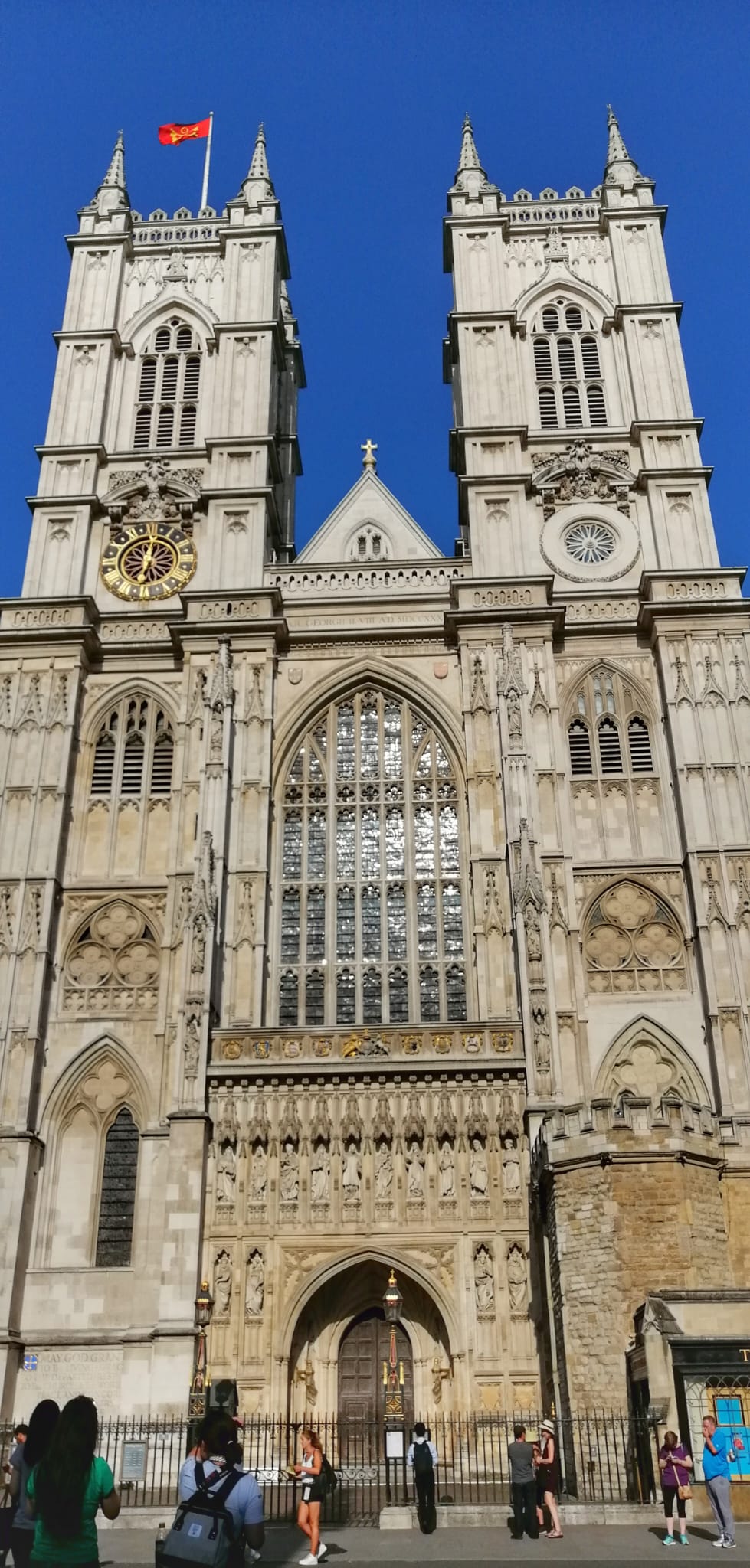
You don't need to be religious to be moved by the experience. Kings, queens, scientists, poets, and statesmen rest here. We found Isaac Newton's monument—bringing back memories of Dan Brown's The Da Vinci Code—as well as the famous Poets' Corner, honoring Geoffrey Chaucer, Charles Dickens, Rudyard Kipling, and William Shakespeare.
When the service concluded, staff kindly directed us through the peaceful stone Cloisters, offering a serene, quiet retreat right in central London.
⛪ Attending Free Worship Services
Cost: Free for worship services (sightseeing requires a paid ticket).
Advance booking required?: NO.
How to attend: Arrive at the worship entry door 25–30 minutes before service times (such as Choral Evensong). Entry is first-come, first-served.
📌 Westminster Abbey Recommended Tours
Discovering London from the Thames
If we had to recommend just one activity to grasp London's unique layout, it would be a River Thames cruise. The city grew along its banks, making the river the ultimate thread connecting medieval London to modern skyscrapers.
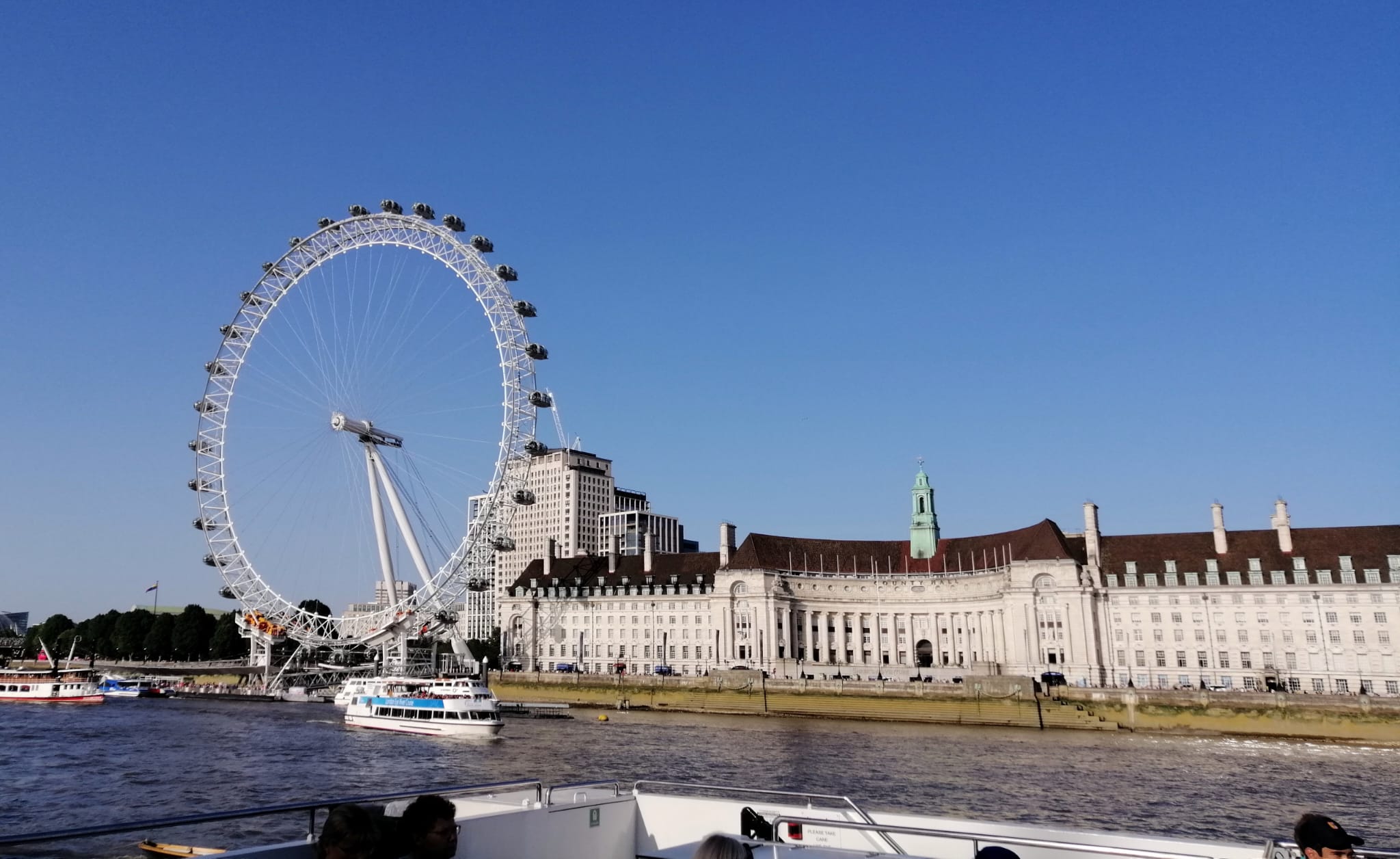
We selected a hop-on hop-off river pass, allowing us to cruise at our own pace past Big Ben, the London Eye, Tate Modern, Shakespeare's Globe, and under the Millennium Bridge (famous from Harry Potter!).
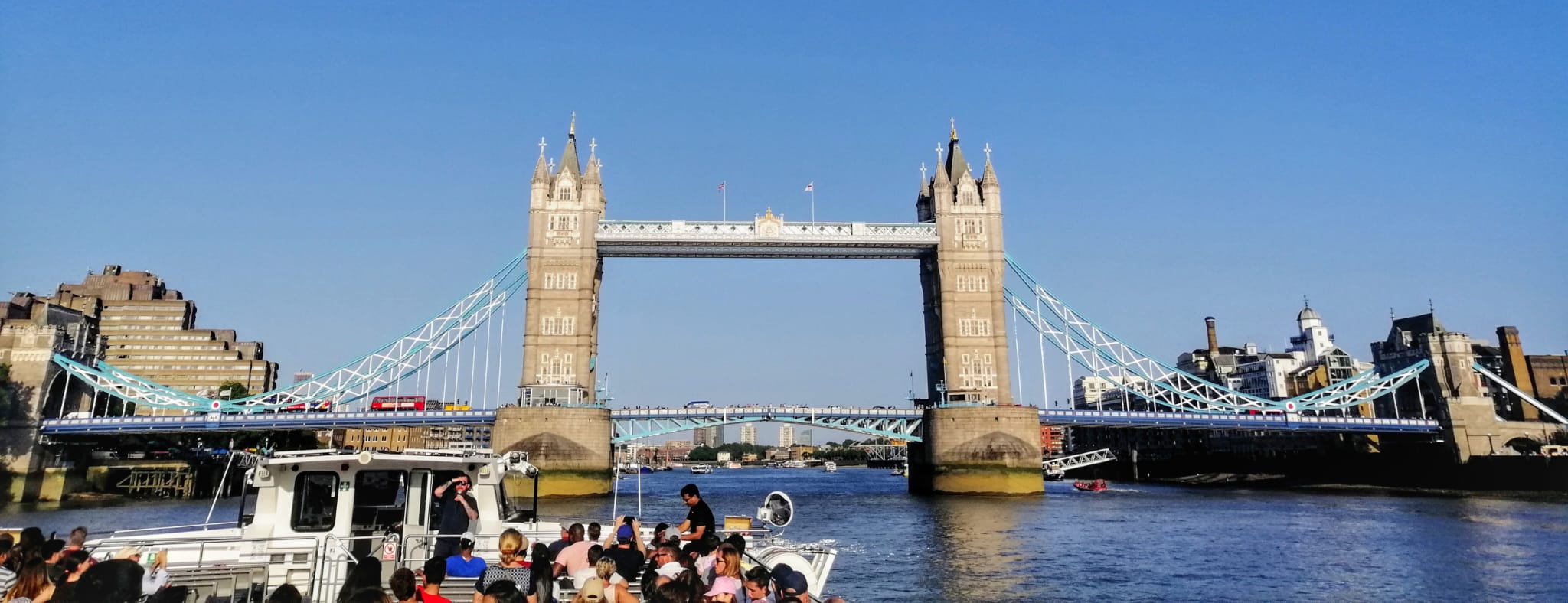
The tour culminated in front of Tower Bridge—its Neo-Gothic towers looking extraordinary from river level.
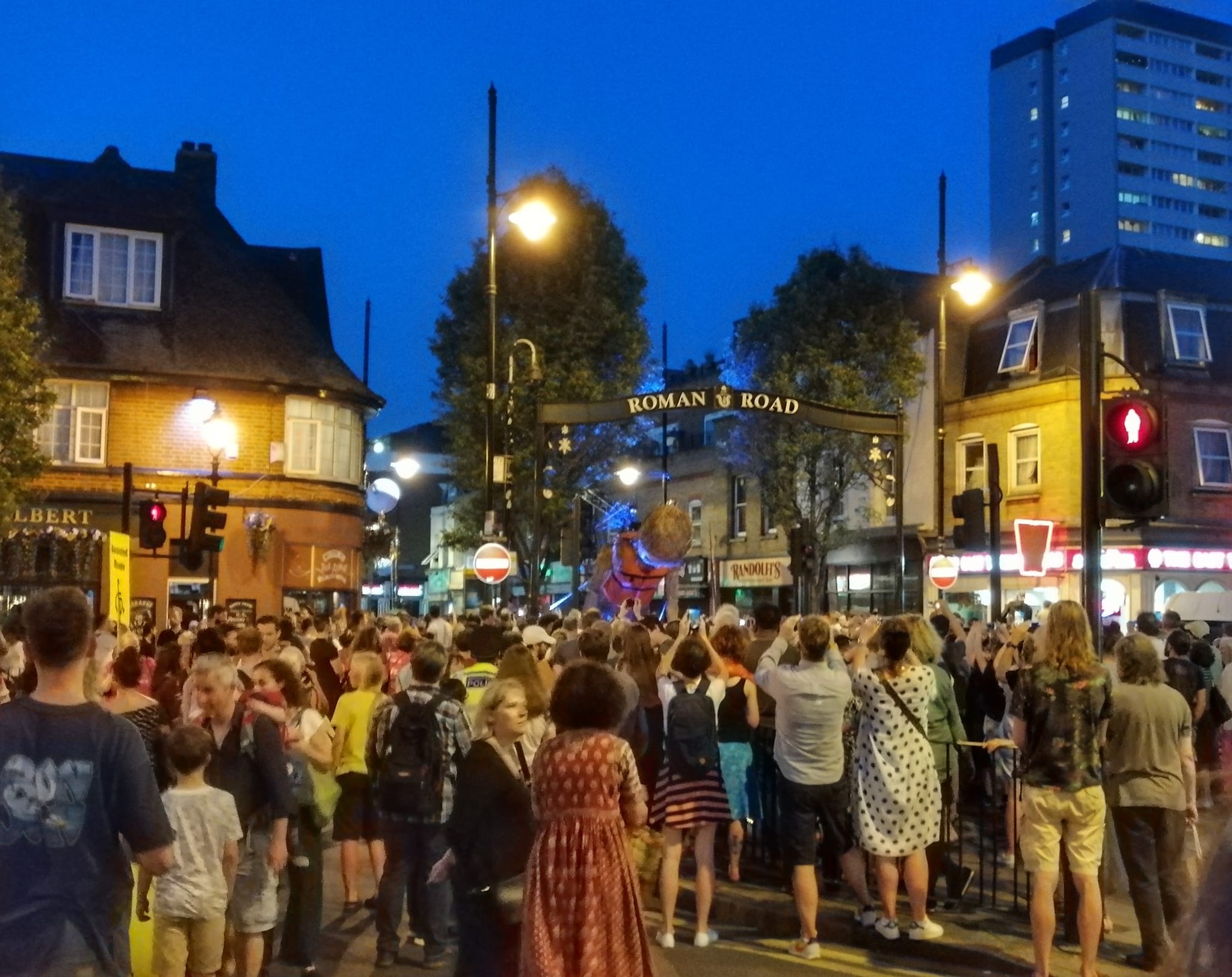
In the evening, we headed toward Bow to watch an open-air street performance called Mo and the Red Ribbon, featuring giant articulated puppets moving through the streets alongside music and actors. A unique cultural surprise!
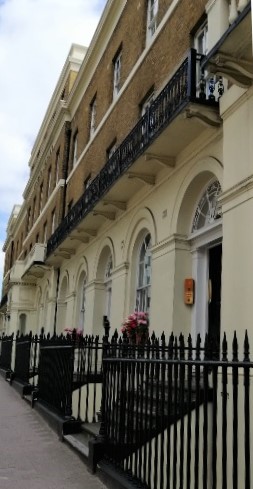
Our fourth day started with a minor medical visit covered by travel insurance. Luckily it was nothing serious, and it gave us a peek into local daily life—the clinic operated inside a charming renovated Victorian townhouse in a peaceful residential neighborhood!
With that settled, we headed to Tower Bridge (opened in 1894). Walking across the high-level glass floor 42 meters above the Thames is thrilling—looking down at traffic and water below is definitely an adrenaline rush!
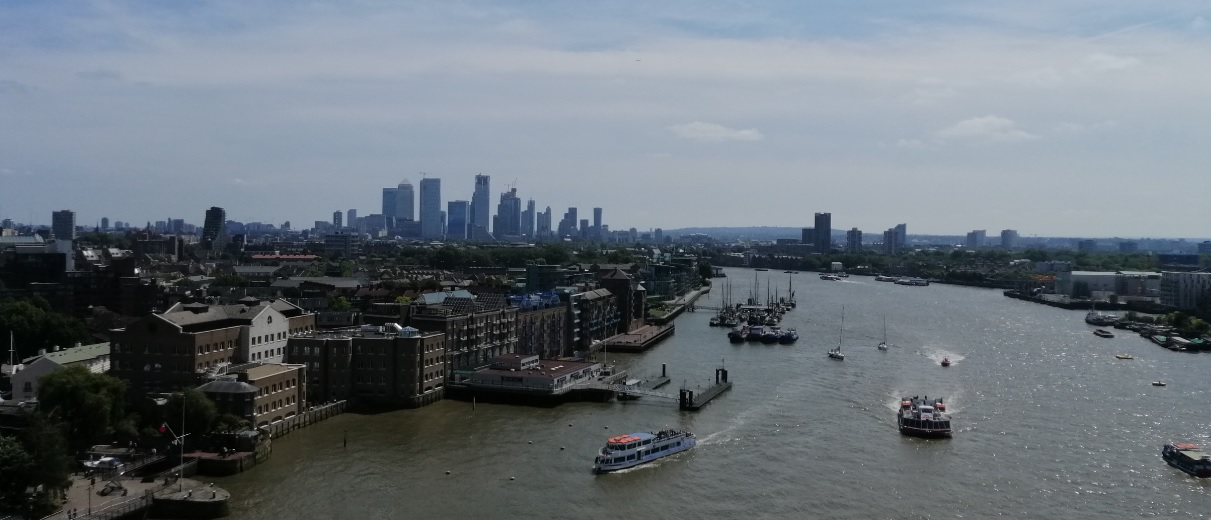
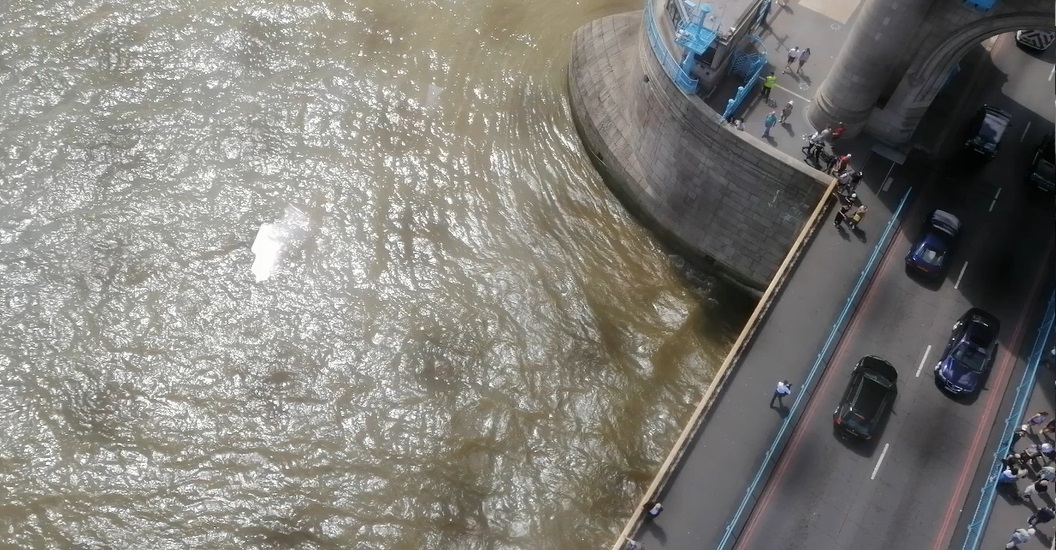
We happened to visit during Tower Bridge's 125th Anniversary celebrations, featuring costumed Victorian actors interacting with visitors and live demonstrations in the historic engine rooms.
Next, we headed to South Kensington to explore two adjacent free museums:
Natural History Museum
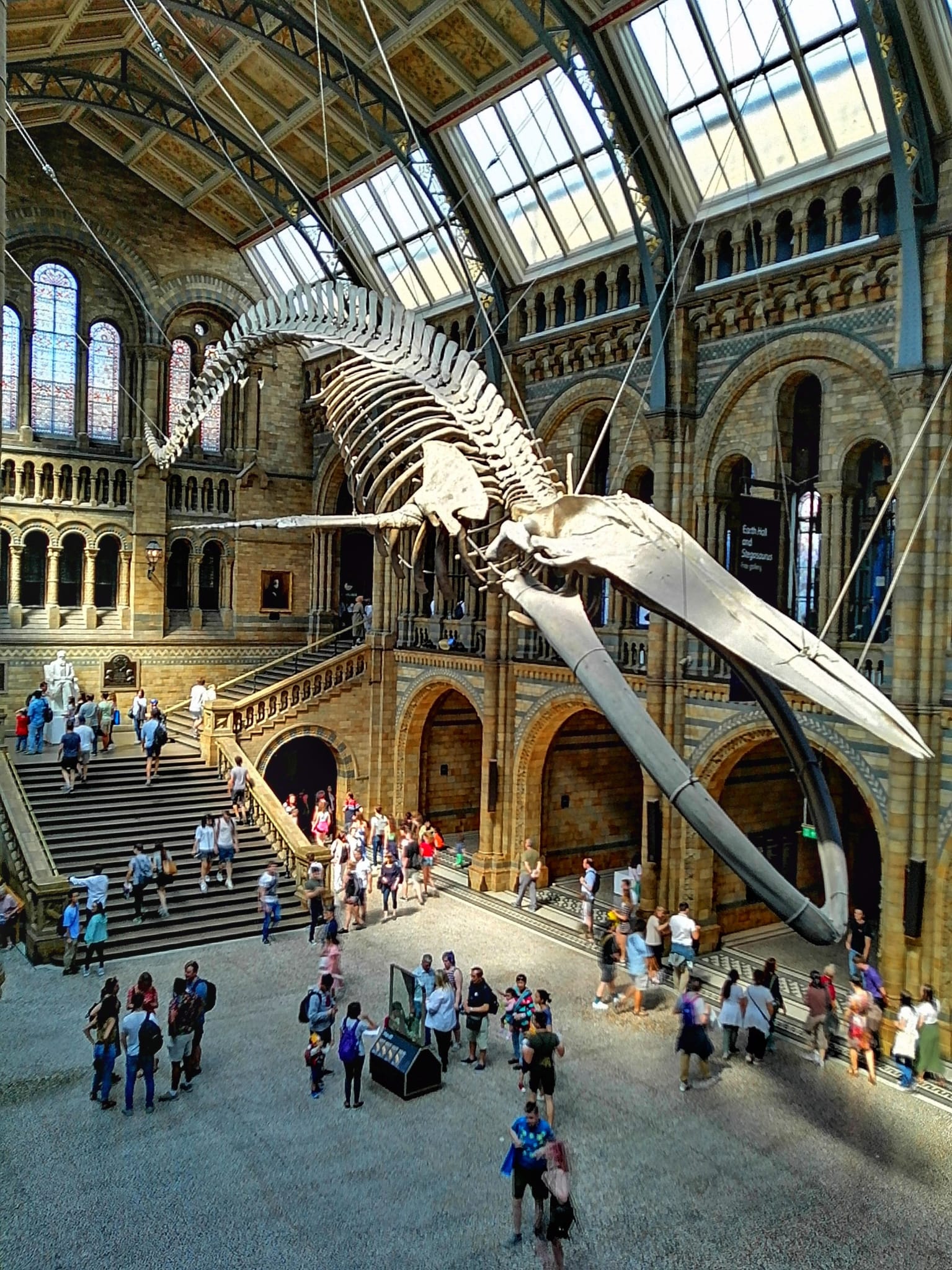
Housed in a spectacular Romanesque Revival building that resembles Hogwarts, it features a giant Blue Whale skeleton in Hintze Hall and fantastic dinosaur exhibits.
It's an absolute must-visit, especially if traveling with kids!
Science Museum
Located right next door, it features interactive space travel, early steam locomotives, aviation history, and hands-on technology exhibits.
We spent our final evening taking a sunset boat ride back down the Thames and enjoying an Italian dinner in a cozy restaurant built under historical railway arches near St. Paul's Cathedral.
Before catching our train to our next destination (Amsterdam), we stopped at King's Cross station to fulfill a mandatory ritual for Harry Potter fans: posing at Platform 9¾!
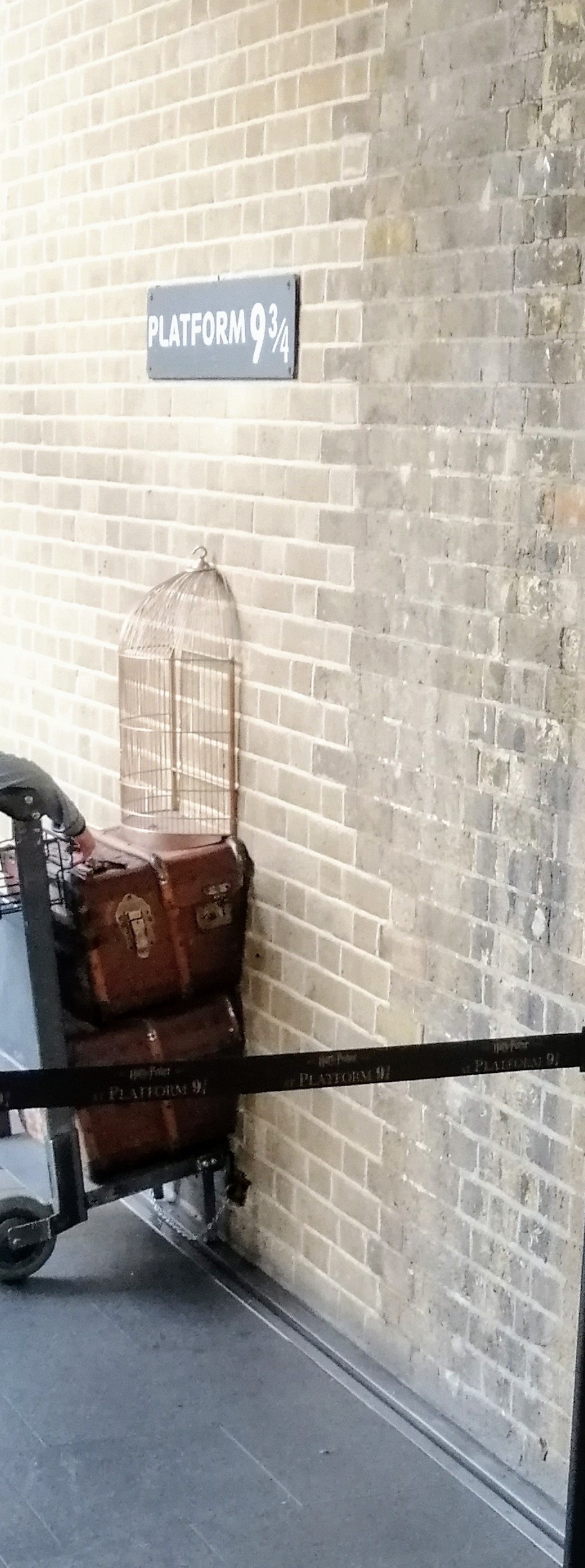
And that was how we said goodbye to London—a city that blown past all our expectations. Five days were enough to make us fall in love with its history, museums, parks, and atmosphere... and enough to prove that you'll always want to come back to London!
Have questions or planning a trip? Feel free to send us an email!