Salvador de Bahia
The city of Salvador is the capital of the State of Bahia in Brazil.
It is a city with over 3 million inhabitants.
It was Brazil's first capital. As such, it experienced significant development during the colonial era.
The city was initially built on a natural hill. This settlement later came to be known as the Upper City (Ciudad Alta / Cidade Alta).
Much of the colonial architecture remains intact in its original period style.
This colonial historic district is called Pelourinho. The name derives from the pillory (whipping post) where enslaved people were chained and punished for disobedience.
Salvador's historic colonial center was designated a UNESCO World Heritage Site in 1985.
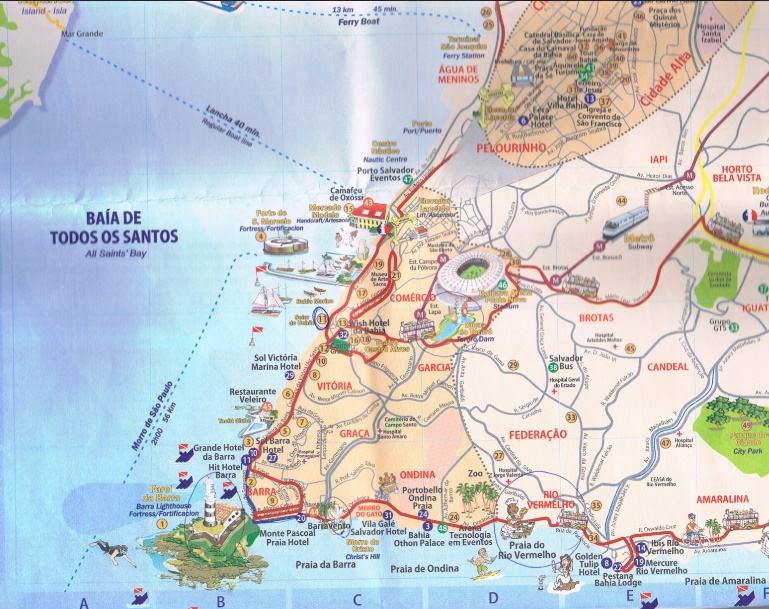
Salvador's bay is named All Saints' Bay (Baía de Todos os Santos) and is the largest bay on the Brazilian coastline.
In the following picture, taken from the map provided at our first hotel, you can see the expansive bay along with several attractions we will describe below. Special thanks to salvadordestination.com for the excellent map distributed across hotels. It is a huge map and well worth keeping handy.
The next photo shows Hotel Pestana Convento do Carmo and its surroundings. 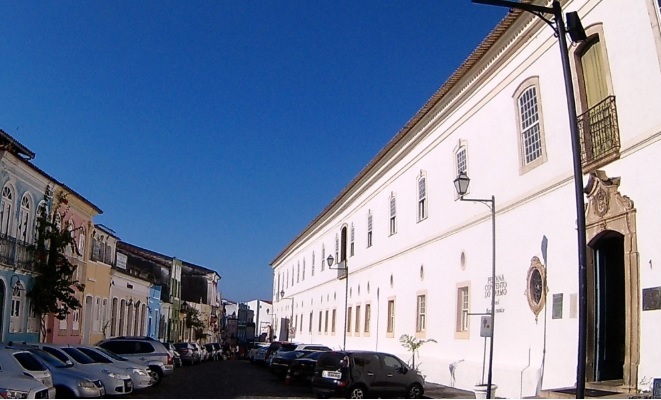
Here are some hotel options to choose from:
Would you like to become a Genius member?
Genius is Booking.com's loyalty program. Unlock instant discounts with a free account.
- 10% discount on selected stays
- 10% off car rentals
- Lifetime rewards that are easy to keep
Join for free and start saving:
Become a Genius Member NowAlways read the most recent reviews.
If choosing a property rated slightly below 8, ensure it has around 1,000+ reviews.
Tours & Activities We Did
- Historic District: Pelourinho
- Barra: beaches, forts, and lighthouse
- Islands Tour (full-day boat trip)
- Coastal bus tour visiting all beaches up to Itapuã
- Full-day trip to Praia do Forte, Guarajuba & Shopping Outlet
How Did We Get Around?
We used UBER for almost all our trips, except for exploring the city beaches where we took public buses.
When arriving at Salvador Airport, we took the metro. We only used a taxi on our last day from the final hotel back to the airport (which was covered by our airline). We also hired a private driver (remise) when visiting Praia do Forte and Guarajuba.
For mobile internet connection needed for UBER, we bought a SIM card from TIM. For tips on buying and setting up a Brazilian SIM card, check our guide here.
Historic District: Pelourinho
It is one of Salvador's main highlights. The historical center is exceptionally well preserved. It houses numerous museums, theaters, musical associations, and a remarkable density of historic churches.
Because we stayed at Hotel Convento do Carmo, located at one end of Pelourinho, we had the opportunity to explore the neighborhood at different times of the day and night.
A Walk Starting from Convento do Carmo
Link to Google Maps starting point here.
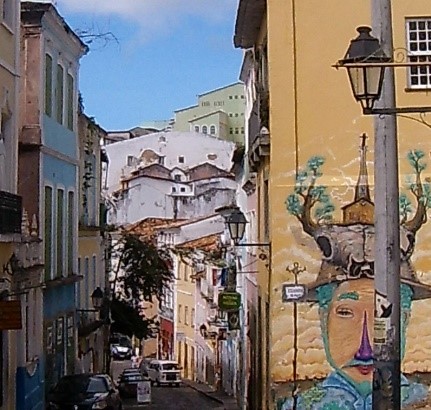
Walking down Ladeira do Carmo, we encounter a narrow cobblestone street lined with restaurants, bars, ancient historic buildings, and a beautiful mural shown above.
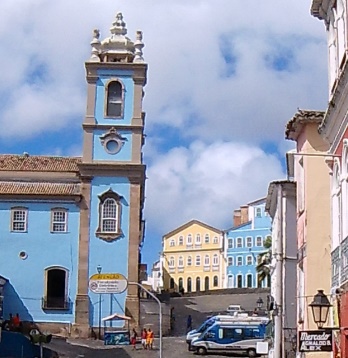
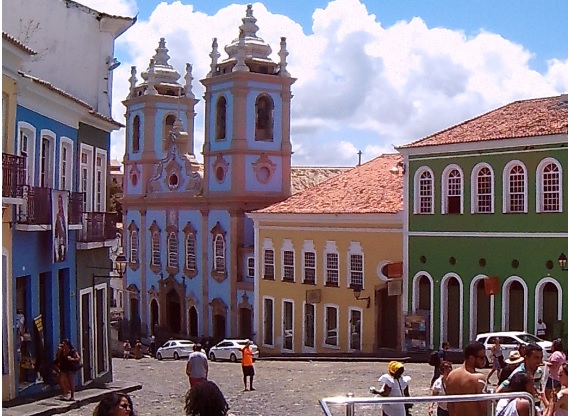
At the bottom of Ladeira do Carmo, you arrive directly at Pelourinho's most iconic postcard view. In our photo, you can spot a noticeable police presence. There aren't many people around as it was taken early in the morning.
The church on the right is the Church of Our Lady of the Rosary of Black People (Igreja Nossa Senhora do Rosário dos Pretos).
This church was built by enslaved workers; it was where enslaved people gathered for service after accompanying their enslavers to other churches. Mass here finished earlier so worshippers could meet outside their enslavers' services.
This church is deeply tied to Religious Syncretism—a blending of Catholicism with African religious traditions brought by enslaved populations. Here is a video clip to see what a service looks like:
Although it's not our video, it gives a great insight into the experience.
We attended Sunday Mass here. Half the congregation were tourists and half were regular local worshippers. It is a very welcoming environment where visitors feel comfortable regardless of belief.
The liturgy is Catholic, like in any Catholic church, but the distinct rhythmic singing and dancing create a uniquely uplifting atmosphere.
Senac Restaurant and Theater
Two doors up from the church, you'll find the Pelourinho Theater and the Senac Cooking School Restaurant. They offer buffet and à la carte dining. It comes highly recommended, though we didn't eat there. We did tour the theater, which displays interesting cultural artifacts. Free admission.
Jorge Amado House Museum (Casa de Jorge Amado)
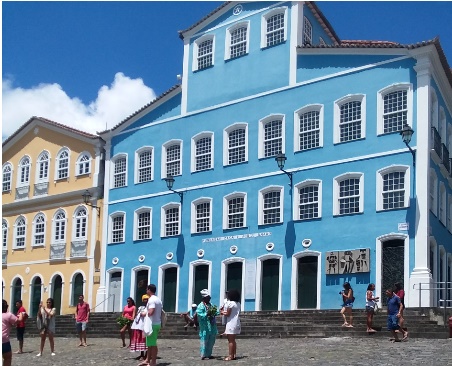
This striking blue building dominates the square, visible on the right side of the photo above.
While the famous writer never actually lived here, the house stores extensive memorabilia and literary collections related to his work.
Tip: Free admission on Wednesdays.
The Jorge Amado House is an iconic focal point. In the surrounding square, you'll spot street musicians and fortune tellers. To the right of the photo is the balcony featured in Michael Jackson's music video They Don’t Care About Us, where the Jorge Amado building appears repeatedly.
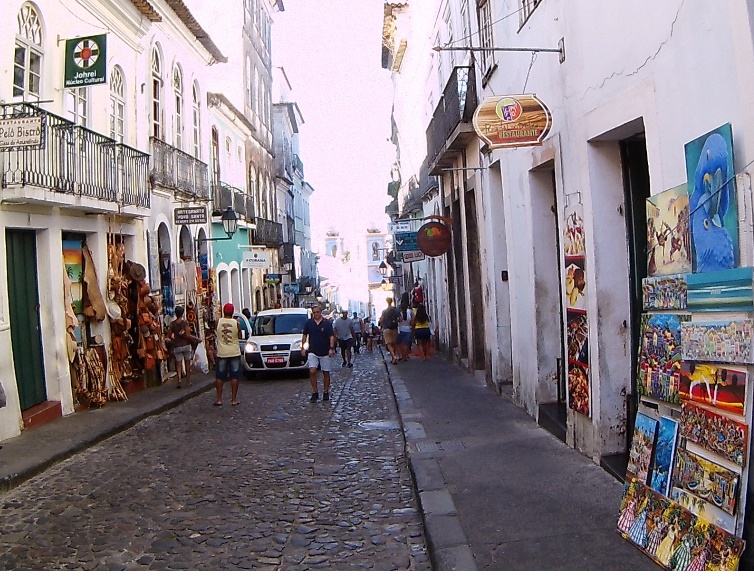
Heading down the street to the right of Jorge Amado's House (Rua Alfredo de Brito), you'll walk along a vibrant street filled with art galleries, cafes, and souvenir shops.
Looking back up the street, the Church of Our Lady of the Rosary of Black People can be seen in the background.
On the left side of the street is a passage where Jorge Amado briefly lived. It's easy to locate as Cassi Turismo travel agency displays its sign right on the sidewalk.
Along this street is A Cubana Ice Cream Shop. We ate there several times—they offer affordable menus and delicious ice cream. However, for the best fruit-flavored ice cream, head to Sorvetaria da Ribeira (located in Shopping da Barra and near the Church of Nosso Senhor do Bonfim, described later).
Faculty of Medicine (Faculdade de Medicina)
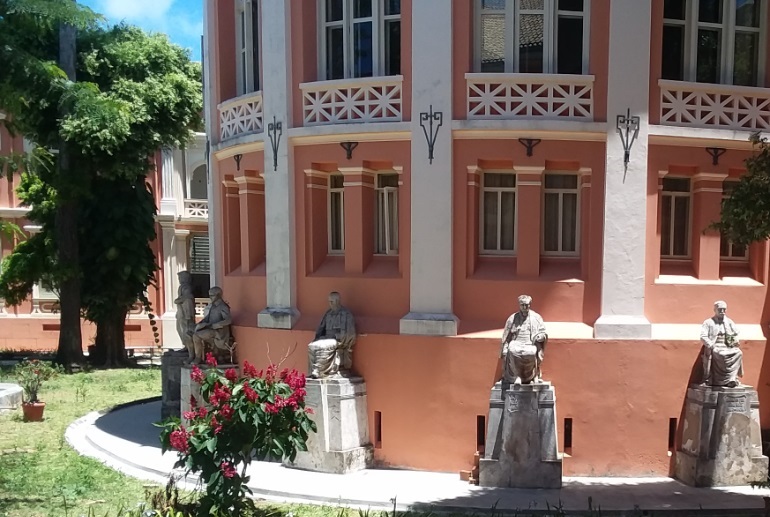
The street leads into "Largo Terreiro de Jesus". On the right side before entering the square is Brazil's historic Faculty of Medicine building, which was undergoing restoration during our visit. Admission is free, featuring displays of century-old medical instruments and antique office equipment.
Multiple statues of philosophers and scientists are situated both inside and outside the building (seen in the photo).
Walking around the building through Largo Terreiro de Jesus leads to another entrance housing the Archaeological Museum.
Salvador Cathedral Basilica (Catedral Basílica)
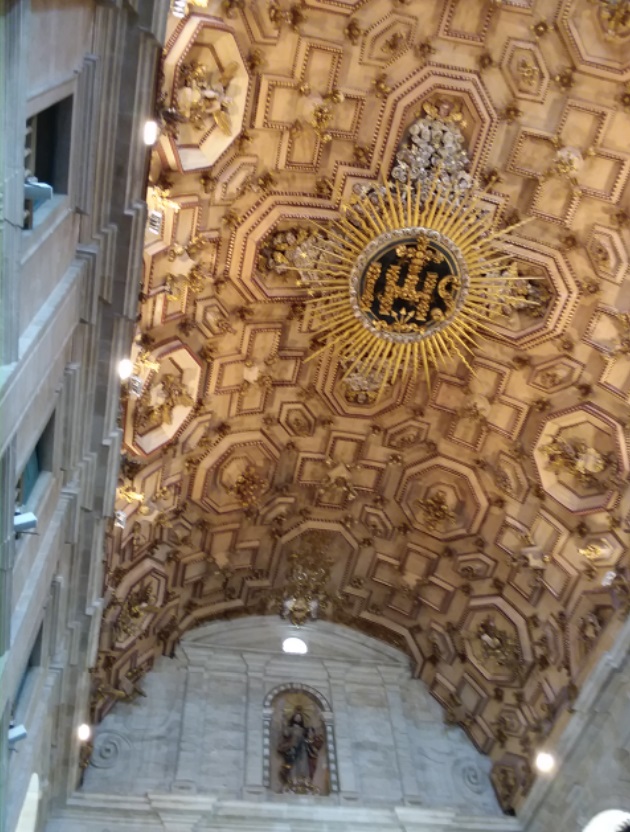
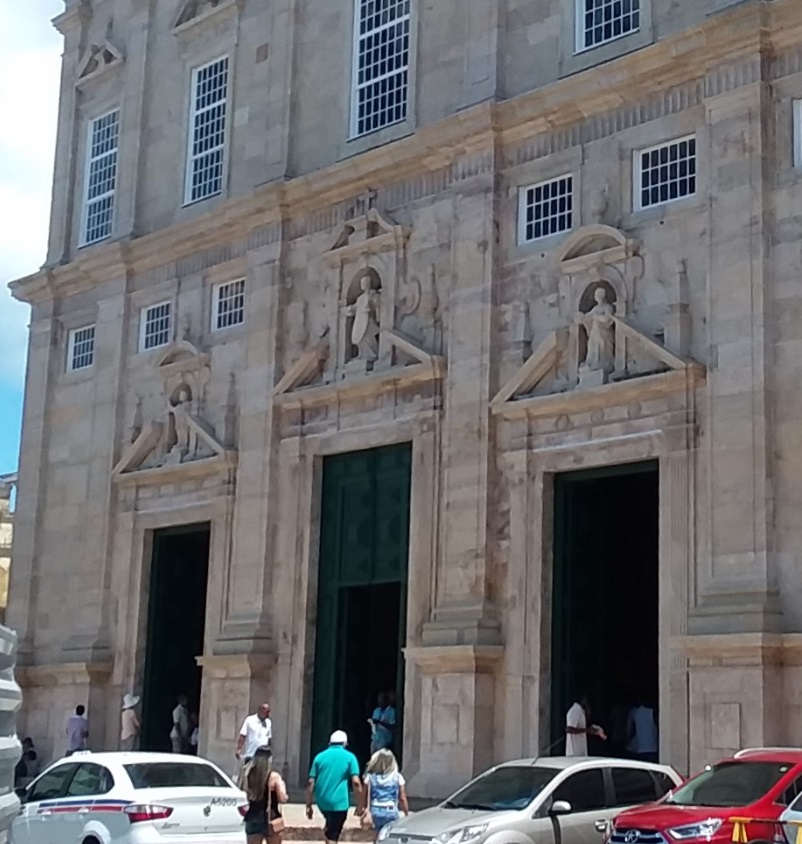
Located right next to the Medical Faculty is the Cathedral Basilica of Salvador, recently reopened after extensive restoration works.
Built over the remains of an earlier Jesuit temple in 1933, sculpted stone figures of Jesuit saints—St. Ignatius of Loyola, St. Francis Xavier, and St. Francis Borgia—adorn the doorways.
The Basilica interior is magnificent, featuring breathtaking gilded ceiling designs.
When we stepped inside, a choir was performing during a live service. Here is a picture of the elaborate ceiling.
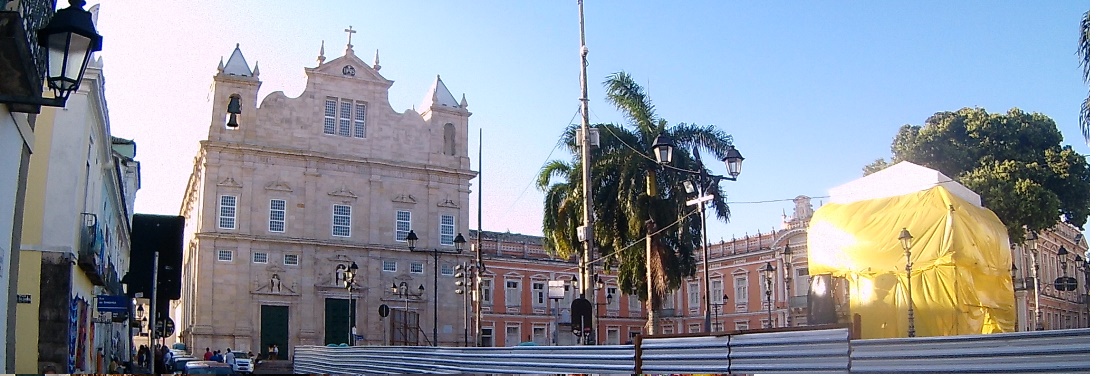
Below is a photo showing the Basilica with the Medical Faculty to its right. The front square was being renovated. The central statue depicts Ceres, the Roman goddess of agriculture and fertility.
Carnaval Museum & Gonçalves Incline Railway
At the end of the alley to the left of the Basilica lies the Carnival Museum (Museu do Carnaval).
We had watched videos about it—it looks interactive and fun—but as we aren't huge carnival enthusiasts, we skipped it due to time and ticket costs.
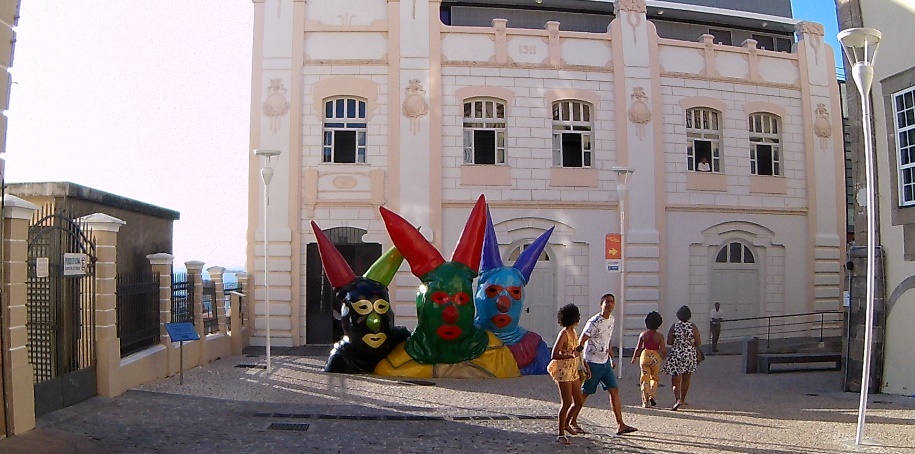
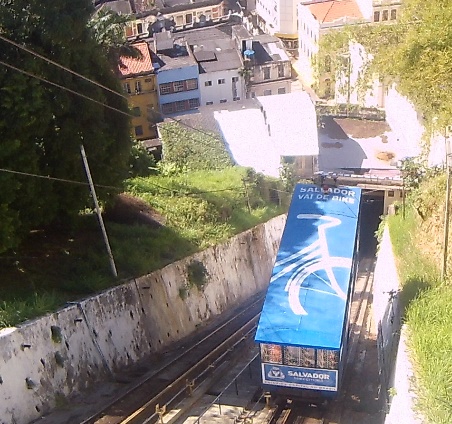
To the right of the museum is the Gonçalves Funicular (Plano Inclinado Gonçalves), one of three cable/funicular routes connecting the Upper City (Cidade Alta) with the Lower City (Cidade Baixa). Unlike the vertical Lacerda Elevator, this funicular runs along inclined tracks while keeping the carriage level. Bicycles are allowed on board, and it is sponsored by Salvador's public bike network. The fare is only R$ 0.15 (the same as Lacerda Elevator).
Exiting the alley, the Energy Museum (Museu da Energia) is located on your left.
Energy Museum (Museu da Energia)
If travelling with kids, don't miss the Energy Museum. It's free, led by knowledgeable guides, highly engaging, and interactive. Visitors learn about various energy sources through hands-on experiments—kids can generate power through movement, light up displays, power radios, and experiment with electrostatics, electromagnetism, wind, and solar energy. Our son wanted to go back! It reminded us of Espacio Ciencia at LATU in Uruguay.
The museum also covers mechanical energy, wind power, and photovoltaics—there is even a mechanical marble demonstration of the Pythagorean Theorem! The photos below show the Pythagorean physics setup and the renewable energy exhibits.
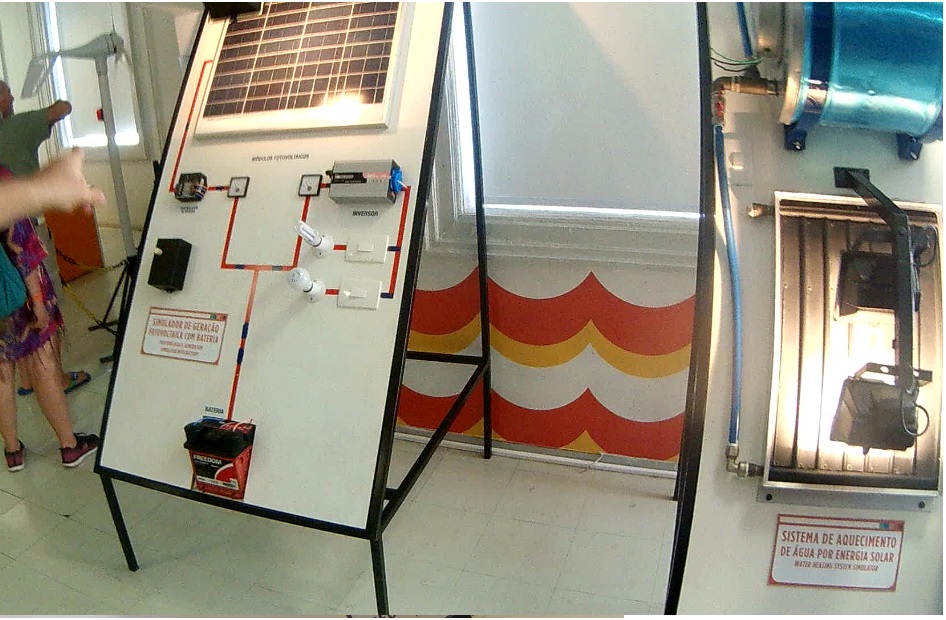
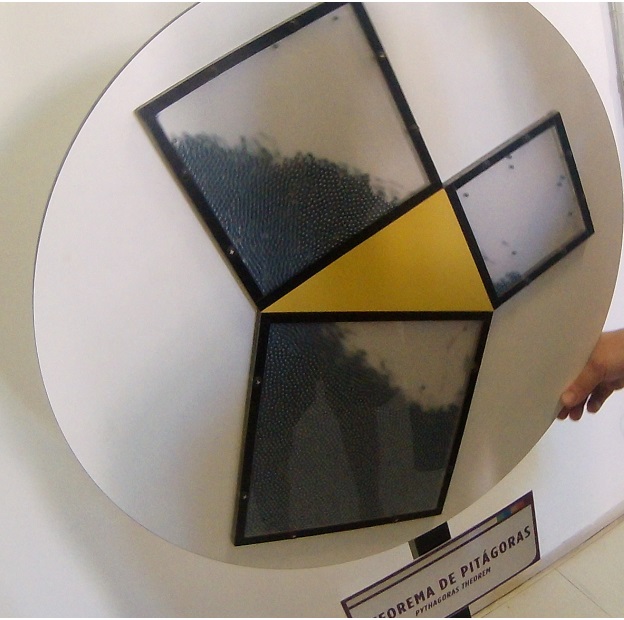
The facilities are clean, free drinking water is provided at the end, and the exhibit is set inside a historic colonial mansion on the second floor (funded by energy sector companies). Adults enjoy the interactive exhibits just as much as children.
Praça da Sé
Exiting the museum brings you directly to Praça da Sé.
It's a wide open plaza frequented by Capoeira dancers and street vendors.
Fallen Cross Monument (Monumento da Cruz Caída)
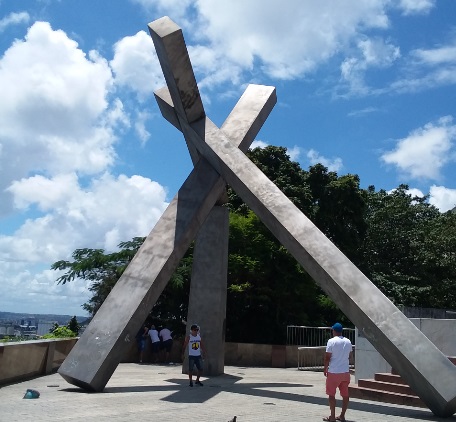
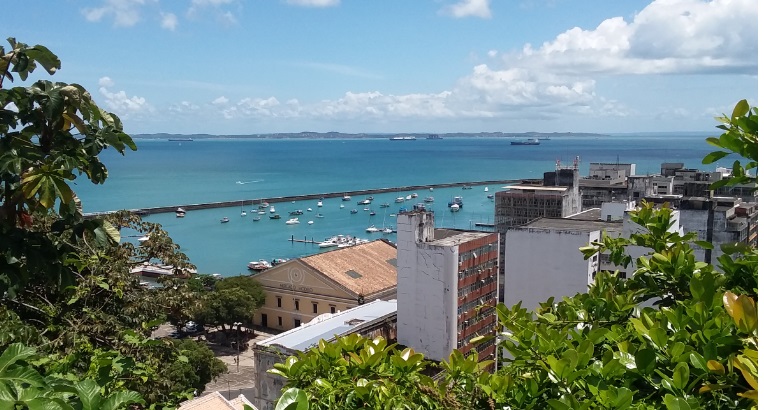
As you cross the square where the buildings end on the right, a scenic viewpoint opens up overlooking All Saints' Bay. Here stands the Fallen Cross Monument by artist Mário Cravo, commemorating the historic Old Cathedral (Igreja da Sé) that was demolished.
The panoramic view is gorgeous, especially at sunset. The historic building situated directly below is the Mercado Modelo.
Continuing along the path, you pass the Baianas Memorial, the Museum of Mercy (Museu da Misericórdia - which we didn't enter), and the City Hall (Prefeitura). This opens up sweeping views toward Rio Branco Palace and the Lacerda Elevator.
Lacerda Elevator (Elevador Lacerda)
Operating since 1869, the iconic Lacerda Elevator connects Salvador's Upper City (Cidade Alta) to the Lower City (Cidade Baixa). Riding it costs just R$ 0.15 (less than US$ 0.05). It is one of the most recognizable landmarks in Bahia.
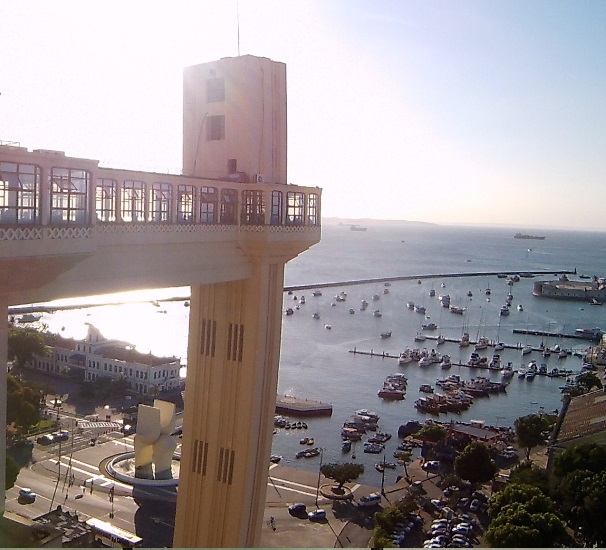
Inside, it operates like a regular enclosed building elevator without glass views. However, the upper walkway leads to panoramic lookout platforms.
The glass corridor leading to the elevator offers great views of Rio Branco Palace (Palácio Rio Branco), former seat of the state government.
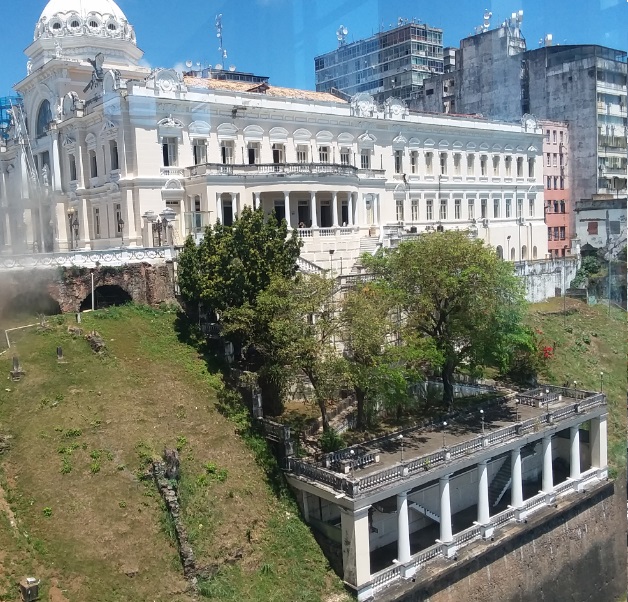
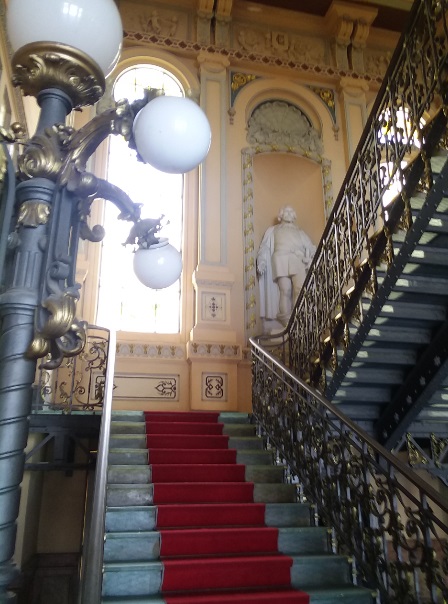
Rio Branco Palace (Palácio Rio Branco)
Also known as the Governor's Palace, it houses a museum displaying historic artifacts across different eras. Open Tuesday through Saturday from 10:00 to 18:00 with free admission.
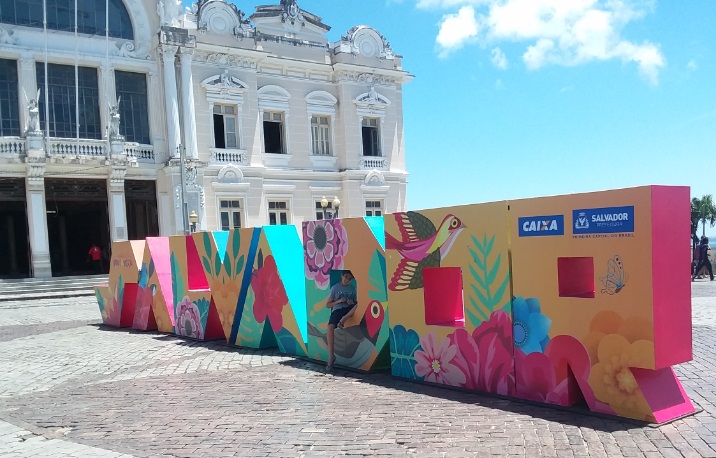
In front of the palace stands the large "SALVADOR" sign. It's a popular spot, so you might need to wait a few moments to snap a clear photo.
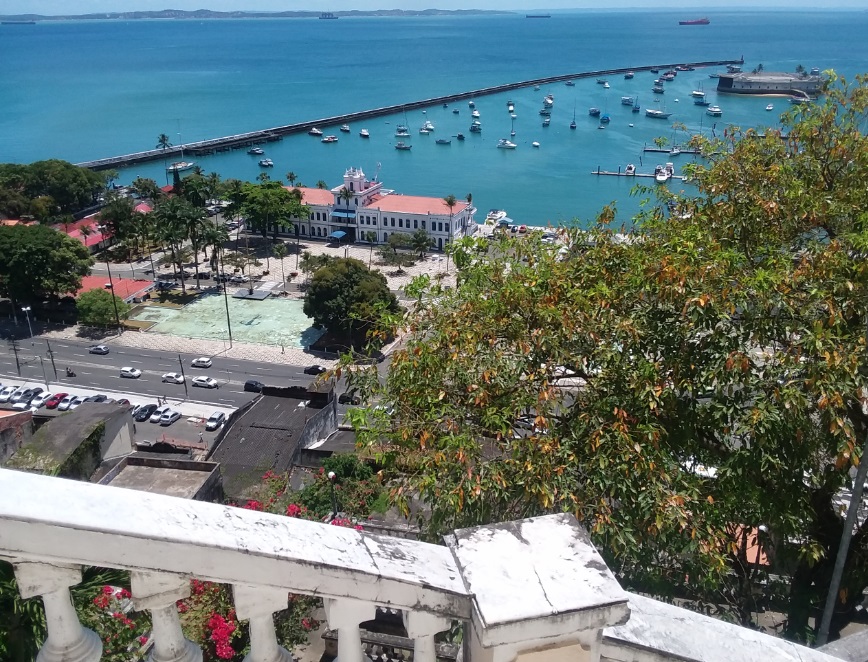
The view overlooking the bay from Rio Branco Palace is spectacular.
Church and Convent of São Francisco (The Golden Church)
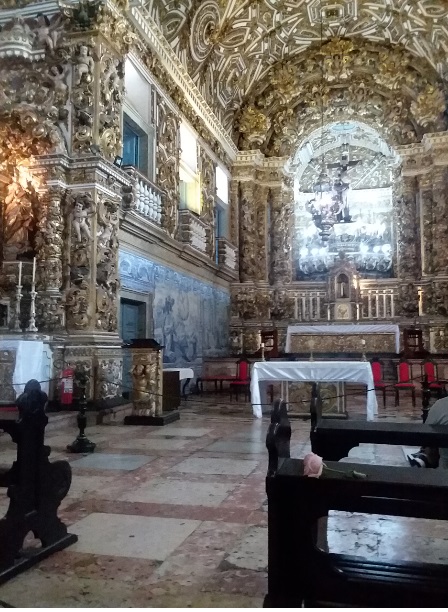
The famous "Golden Church" (Igreja e Convento de São Francisco) is one of Salvador's major sights. It presents an interesting cultural contrast: while Saint Francis promoted poverty and austerity, the interior of this church is decorated with nearly a ton of gold leaf.
To get here, walk back toward the Basilica and take the perpendicular street shown on the map above, or view the location here.
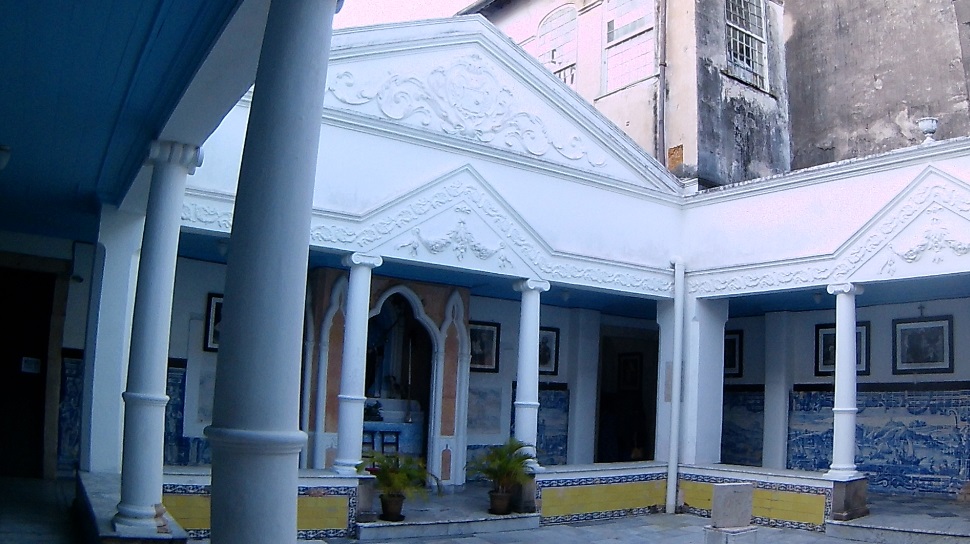
There are separate entrances for the convent and the main church on either side of the entrance. Admission is R$ 5 per section. Inside the convent, you can admire blue-and-white Portuguese tilework (azulejos) illustrating biblical scenes, alongside a small museum, courtyard, and historic grounds.
Inside the nave, visitors are surrounded by detailed gilded woodwork carving.
Below is a photo showing the inner cloister and its traditional hand-painted tiles:
We concluded our tour by attending a show by the Balé Folclórico da Bahia. We highly recommend watching their performance—it takes you through the history and Afro-Brazilian cultural origins of Bahia with incredible energy. Tickets are significantly cheaper and more authentic than typical tourist dinner shows.
🚗 Car Rental: The Most Flexible Option
If you prefer driving on your own schedule or are traveling as a group, renting a car is very economical and gives you complete freedom to explore.
We always suggest comparing prices here:
Compare Rental Cars on Discover CarsBarra Lighthouse (Farol da Barra)
The Barra Lighthouse is one of Salvador's most iconic symbols.
You can enter the fort structure, climb up to the light tower, and visit the Nautical Museum inside.
Sunset is the best time to visit—the views are incredible and crowd gatherings create a lively atmosphere along the lawn.
Here is a short video compilation we created showcasing Farol da Barra on YouTube:
Dos Frades Island & Itaparica Island
We booked our excursion with Cassi Turismo in Pelourinho near our hotel, though other tour providers operate the same route.
On the morning of the tour, we walked down through Pelourinho, took the Lacerda Elevator down, crossed the avenue, and walked past Mercado Modelo to the nautical terminal where boats depart. The area felt fine to walk through during the daytime, though keeping standard safety precautions in mind is always advisable.
The tour departed around 9:00 AM aboard a traditional schooner boat. In the center, a table was set with fresh tropical fruit. Drinks were prepared on board (billed separately at the end). Three live musicians played classic Brazilian samba and axé songs throughout the crossing, creating a festive atmosphere.
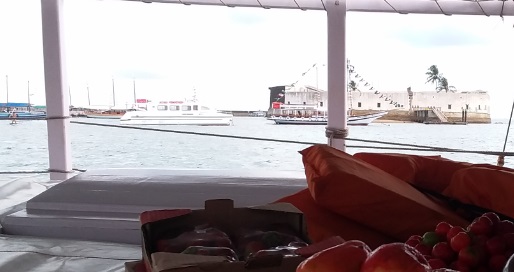
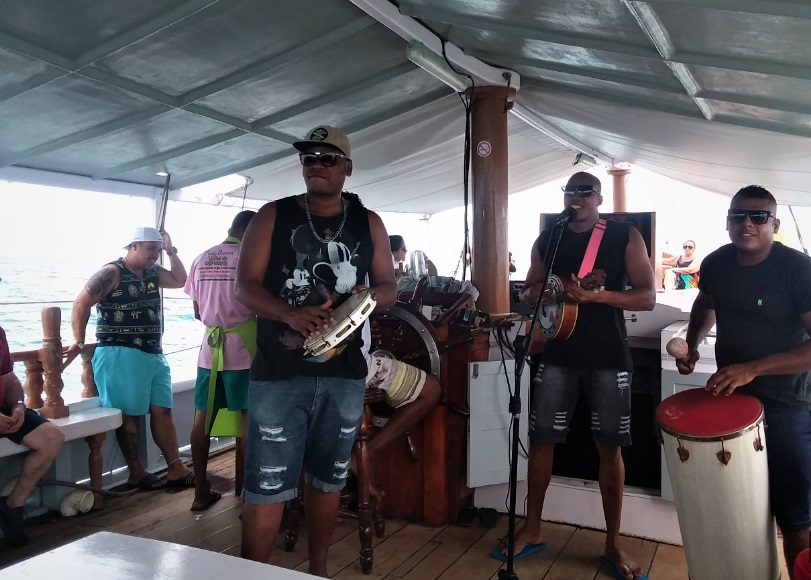
As you sail away from Salvador, the boat offers sweeping panoramic views of All Saints' Bay, passing right by the circular São Marcelo Fort (Forte de São Marcelo). It takes about an hour to reach Ilha dos Frades (Friars' Island).
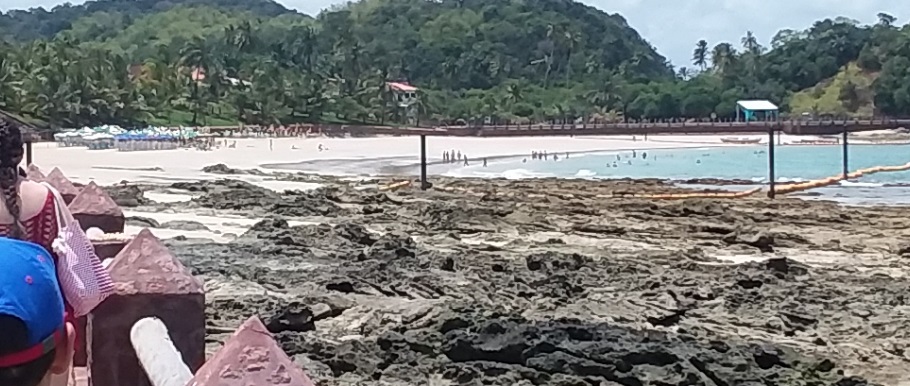
Upon stepping onto the pier, visitors pay an environmental conservation fee, as Ilha dos Frades is an eco-protected reserve with Blue Flag certification. We spent around 1.5 hours here. A scenic wooden pier decorated with seashell artwork leads to a beach with clear water, soft white sand, and gentle waves. Visitors can also walk up a small hill to a hilltop chapel overlooking the bay.
Free beach chairs and tables are available at the beachfront kiosks regardless of whether you order food. The beach is beautiful, and our time there flew by fast.
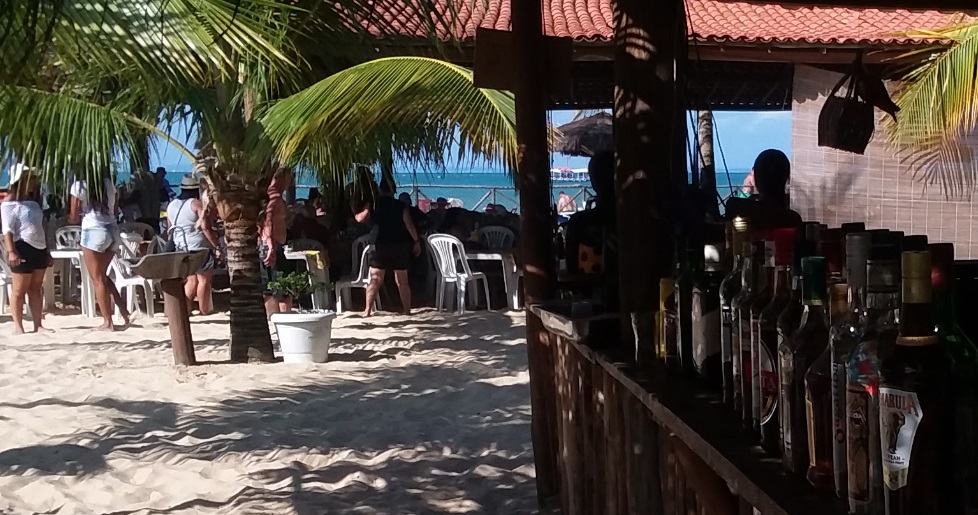
Back on board, live music continued as we sailed toward Itaparica Island (Ponta de Areia area). Guests transfer to smaller shuttle boats to reach the shore near Manguezal Restaurant, where a buffet lunch is served.
The buffet features traditional Bahian regional cuisine.
Behind the restaurant, there is a serene lagoon with paddle boats and hammocks for relaxing.
The beach area here is calmer compared to Ilha dos Frades, featuring soft sand and shallow water.
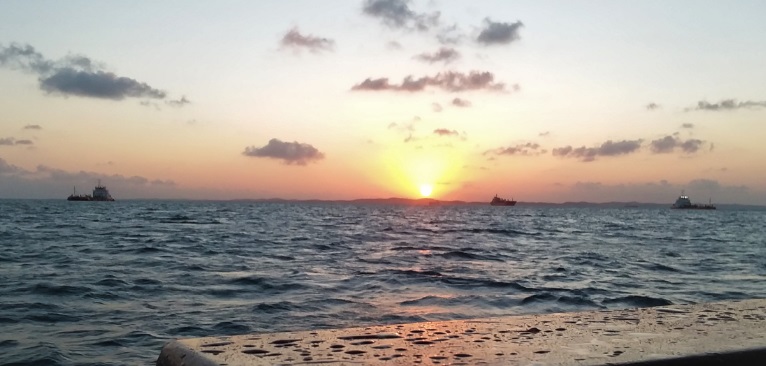
We boarded the return boats in the late afternoon. The sunset view over All Saints' Bay on the return trip between 17:30 and 18:00 was memorable. Upon returning to the harbor, we ordered an Uber to our next hotel near Farol da Barra.
Tip: Buying tour tickets in cash is often cheaper than paying with credit cards in local agencies.
Praia do Forte – Guarajuba – Shopping Outlet
This full-day tour was one of our absolute favorite trips from Salvador de Bahia, right alongside Morro de São Paulo. We look forward to returning to spend a few dedicated days here.
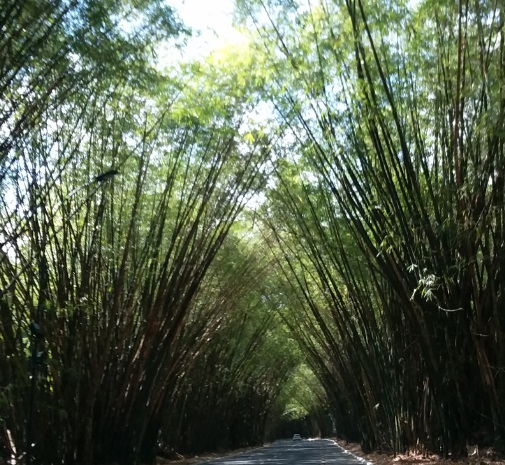
Our morning started with schedule complications trying to reschedule our flight back to Montevideo due to airport strikes during our layover city. Airline phone support asked us to visit the airport customer desk directly to check for earlier standby flights. We took an Uber with our three carry-on bags. Unfortunately, no earlier seats were open, and the airline provided a single hotel night near the airport. Making the best of the situation, we took photos along the famous Bamboo Tunnel (Tênel de Bambus) leading into Salvador Airport.
After storing our luggage at Novotel Salvador Hangar, we wanted to make the most of the day. Scheduled tour buses to Praia do Forte had already left. While public buses run along Linha Verde, taking an Uber over the 123 km round trip is expensive and finding a return driver from coastal beaches can be unpredictable.
The hotel receptionist connected us with a trusted private driver (remise) named Beni, who drove a clean, comfortable car. He served as an excellent driver and guide, dropping us right at Praia do Forte's pedestrian village near the TAMAR Project entrance.
Along the way, locals offered whale-watching boat tours, though we skipped them due to time constraints.
The pedestrian village is charming, leading directly toward the sea where the TAMAR Project sanctuary is located. TAMAR is a sea turtle conservation and rescue initiative operating across Brazil (similar to their facility in Florianópolis).
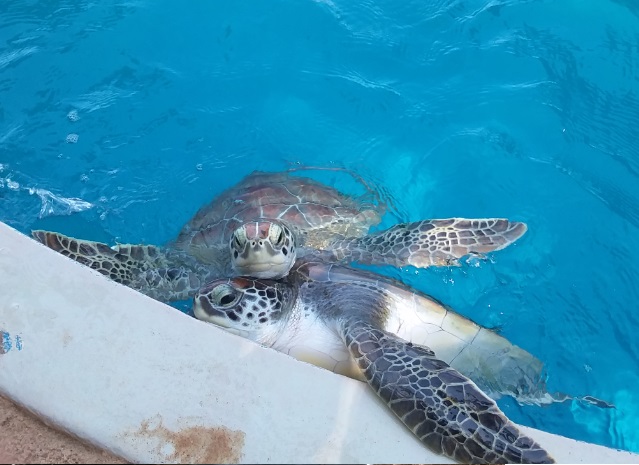
The sanctuary facility is built right along the oceanfront. Visiting supports sea turtle protection efforts directly.
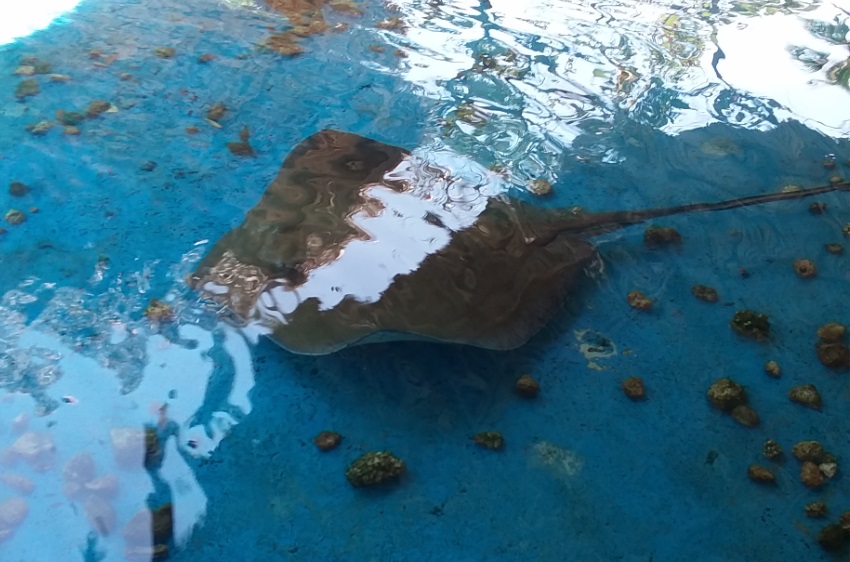
The educational displays explain Brazil's 8 sea turtle species, 5 of which nest along the Brazilian coast. Visitors can view tanks housing stingrays (with guided touch pools), learn about delicate marine ecosystems, and see ancient turtle fossils alongside local fish species and small sharks.
After meeting back up with our driver, we visited the small historic church on the rocky shoreline of Praia do Forte. From here, humpback whale watching tours depart into open water (we had previously spotted whales from the ferry returning from Morro de São Paulo to Salvador).
The beach cove here features beach kiosks and calm waters ideal for snorkeling, alongside a colorful fishing harbor.
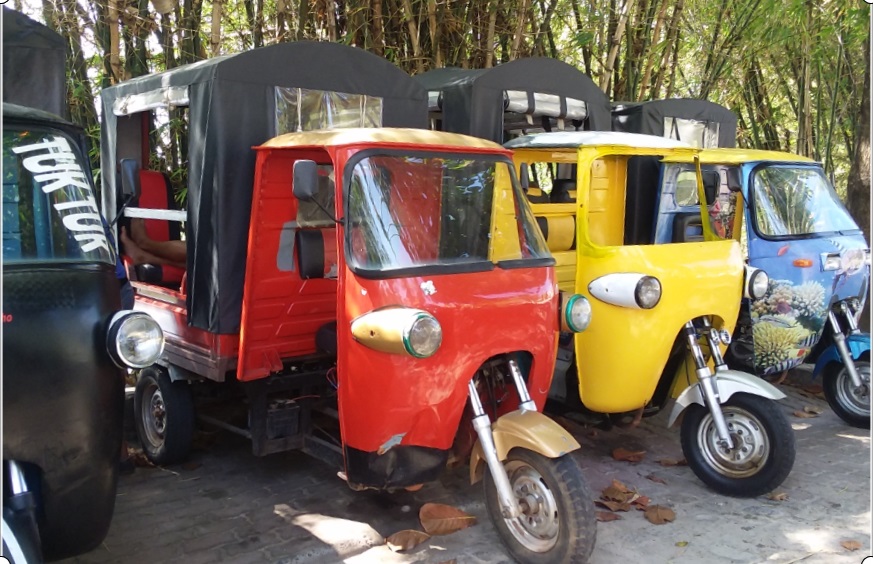
Leaving Praia do Forte, we drove past Klaus Peters Park. We noticed motorized auto-rickshaws (locally called "tuk-tuks"), which transport visitors into the car-free center during peak season when parking is restricted outside town.
Along the highway toward Guarajuba, specialized canopy bridges made of ropes and wooden planks stretch over the road—designed specifically to let wild marmoset monkeys (macacos) cross safely above traffic.
Guarajuba
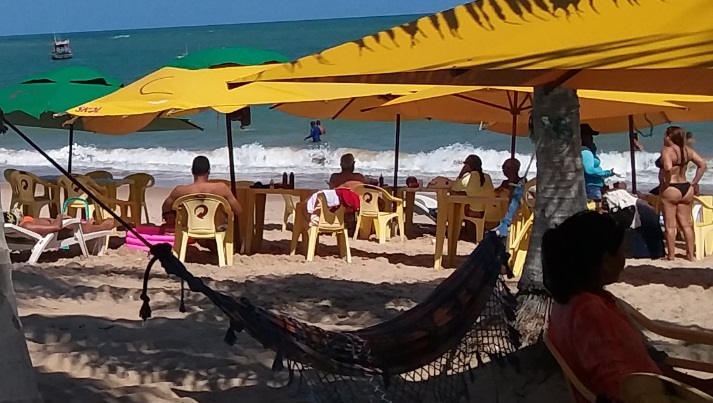
Upon arriving at Guarajuba Beach, we headed to a popular beachfront restaurant called Camilo. Staff bring out trays of fresh seafood so you can choose your catch to be prepared on the spot.
They set up tables with sun umbrellas and hammocks right on the white sand under coconut palms.
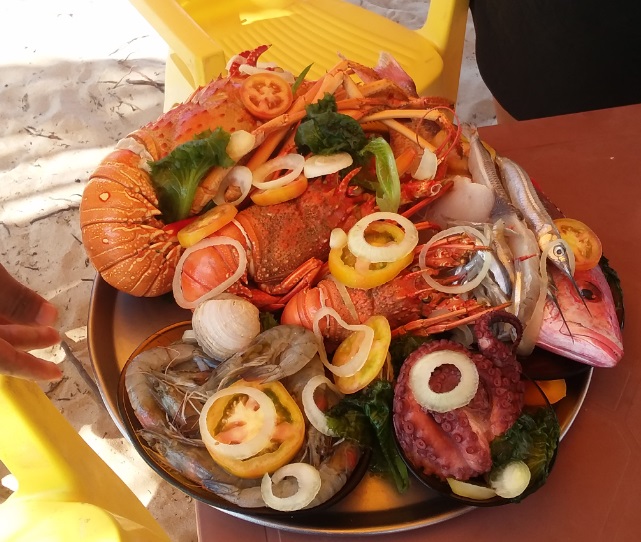
We enjoyed fresh coconut water, delicious seafood, and relaxing beach vibes until sunset.
On the return drive, our driver Beni gave us an hour to shop at the open-air Premium Outlet center nearby—a great stop for deals. We returned to our hotel late in the evening for a wonderful dinner prepared by the hotel chef.
Hotels in Salvador de Bahia
Below are map links showing current hotel prices across Salvador de Bahia. Booking through these links supports our site at no extra cost to you.
We book around 90% of our accommodation through Booking.com, alongside occasional direct chain or agency bookings, with great results.
Would you like to become a Genius member?
Genius is Booking.com's loyalty program. Unlock instant discounts with a free account.
- 10% discount on selected stays
- 10% off car rentals
- Lifetime rewards that are easy to keep
Join for free and start saving:
Become a Genius Member NowAlways read the most recent reviews.
If choosing a property rated slightly below 8, ensure it has around 1,000+ reviews.
More About Us and Our Travels
Check out our story and read more travel reviews here.
By booking through our affiliate links, you pay the exact same price while supporting our site so we can keep sharing detailed guides like this one. Thank you for your support!