There are destinations that create such high expectations that one fears being disappointed. With Pamukkale, the exact opposite happened: it far exceeded everything we had imagined.
In this article you will find:
The Cotton Castle and Travertine Terraces
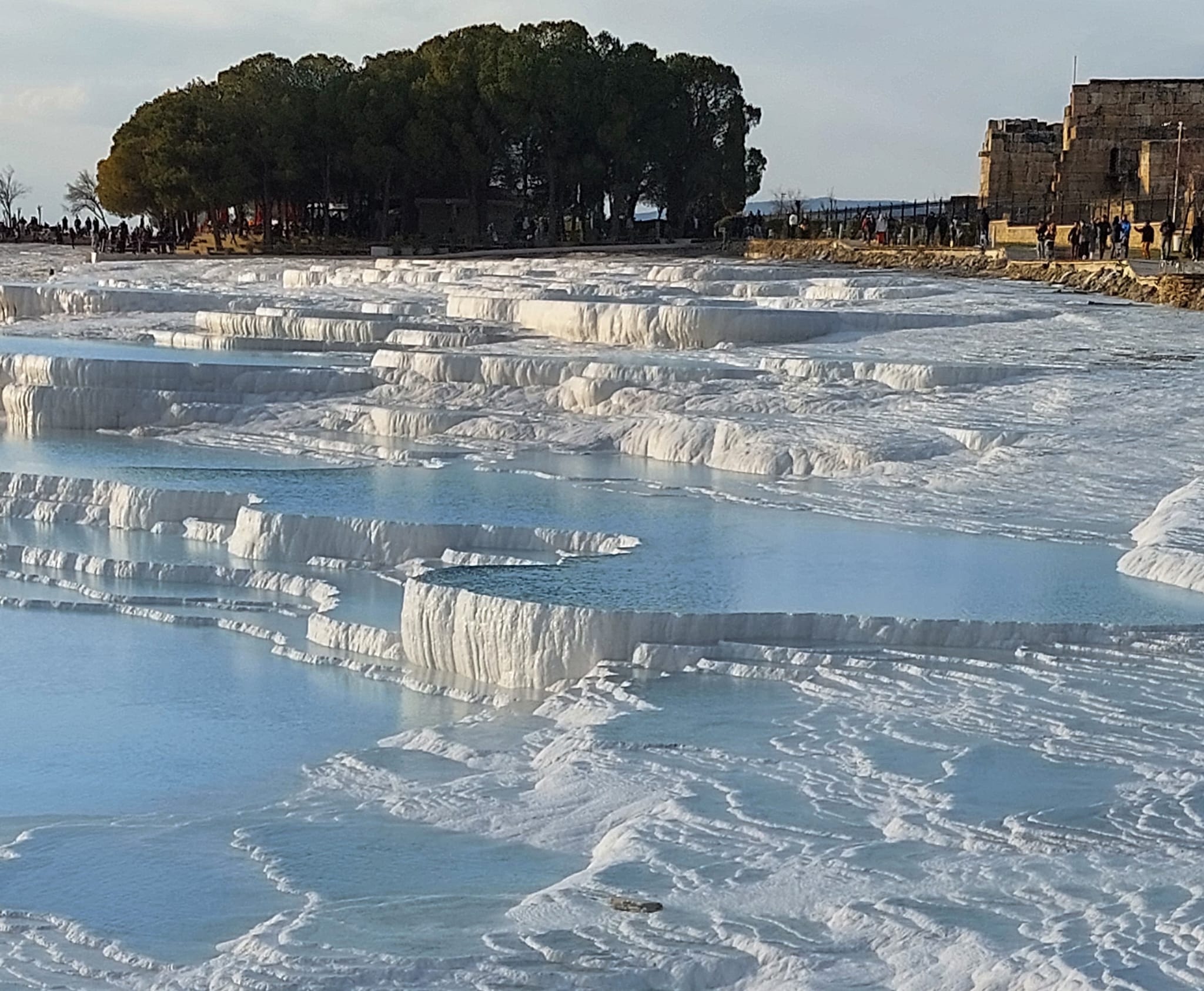
From a distance, its white terraces look like a snow-covered mountain or massive cotton fluffs. That is where its name originates, meaning "Cotton Castle" in Turkish. This unique landscape is the result of thousands of years of calcium-rich thermal spring waters depositing minerals to shape the famous travertine pools.
We were fortunate enough to visit on a completely clear day. The contrast between the brilliant white travertine and the turquoise waters made the landscape look surreal. You can walk barefoot across designated terraces and even wade into the warm thermal waters—a relaxing and unforgettable experience.
Cleopatra's Pools and the Archaeological Museum
Within the complex lies the famous Cleopatra's Pool, an optional thermal swimming area where visitors can swim among submerged ancient Roman columns.
Additionally, those looking to dive deeper into history can visit the archaeological museum, which displays valuable artifacts discovered throughout the ancient city. Both require an additional admission fee.
Hot Air Balloon Ride
Weather permitting, another popular activity is taking a hot air balloon flight, offering a spectacular bird's-eye view of the white terraces juxtaposed against the green valley below.
Hierapolis: The Ancient Roman City
Just a few steps away lies Hierapolis, the ancient Roman spa city declared a UNESCO World Heritage site alongside Pamukkale in 1988.
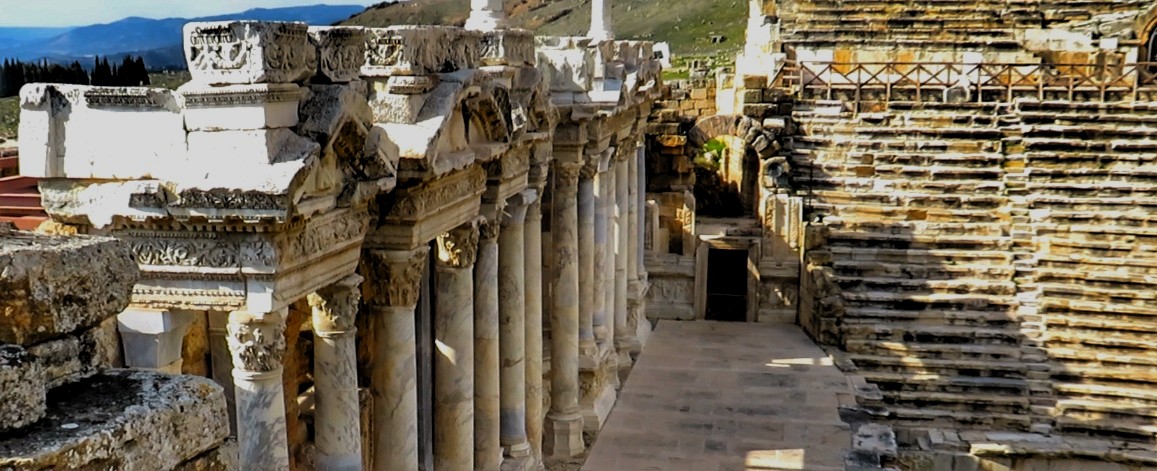
Its sprawling necropolis, ancient sarcophagi, and magnificent Roman theatre—built directly into the natural hillside slope—showcase remarkable engineering and offer some of the finest panoramic views across the entire site.
An Unexpected Encounter
After exploring the ruins, we returned to the terraces to take in the landscape one last time. There, we experienced an unexpected moment when we ran into CNN presenter Richard Quest, who was filming a report on Pamukkale and kindly agreed to take a photo with us.
A Well-Deserved Rest
To conclude our tour, we were taken to a spacious restaurant surrounded by pleasant gardens—a perfect spot to relax and enjoy lunch before continuing our journey.
Pamukkale was one of the places we were most excited to visit. Although we had seen it in countess photographs before, being there in person is a sensation that photos simply cannot convey. It is a destination where nature and history converge in a truly unique way, making it an essential stop on any itinerary through Turkey.
📌 Recommended Tours and Excursions in Pamukkale
To explore Pamukkale and Hierapolis with a guide or fly overhead in a hot air balloon, check out these top options:
👉 Exclusive Deal! Email us at viajoxmicuenta@gmail.com to get a special promo code.
You can also check available options on tiqets.com, an excellent platform for securing tickets and tours in Pamukkale:
If you choose to book through our partner links on tiqets.com or Booking, your price remains identical while helping support our independent content creation.
🗺️ Continue Exploring Turkey with Us
Pamukkale is just one of many highlights along this fascinating route. We invite you to read our detailed guides to keep building your self-guided itinerary:
🏛️ Ephesus and the House of the Virgin Mary: An unforgettable journey into the past through the majestic Library of Celsus and ancient marble avenues.
Read Our Ephesus Guide ➔🎈 Cappadocia Hot Air Balloon Experience: Soaring over fairy chimneys and unique valleys at sunrise—a true bucket-list dream fulfilled.
Read Our Cappadocia Balloon Guide ➔